Iphigenia
Iphigenia is the daughter of Agamemnon and Clytemnestra whom her father offered to Artemis at Aulis, so the Greek fleet could sail for Troy. He lured her there with a false promise of marriage to Achilles. Aeschylus treats her as killed at the altar. Euripides's Iphigenia in Tauris and Apollodorus's Epitome say Artemis left a deer in her place and made her a priestess among the Taurians.
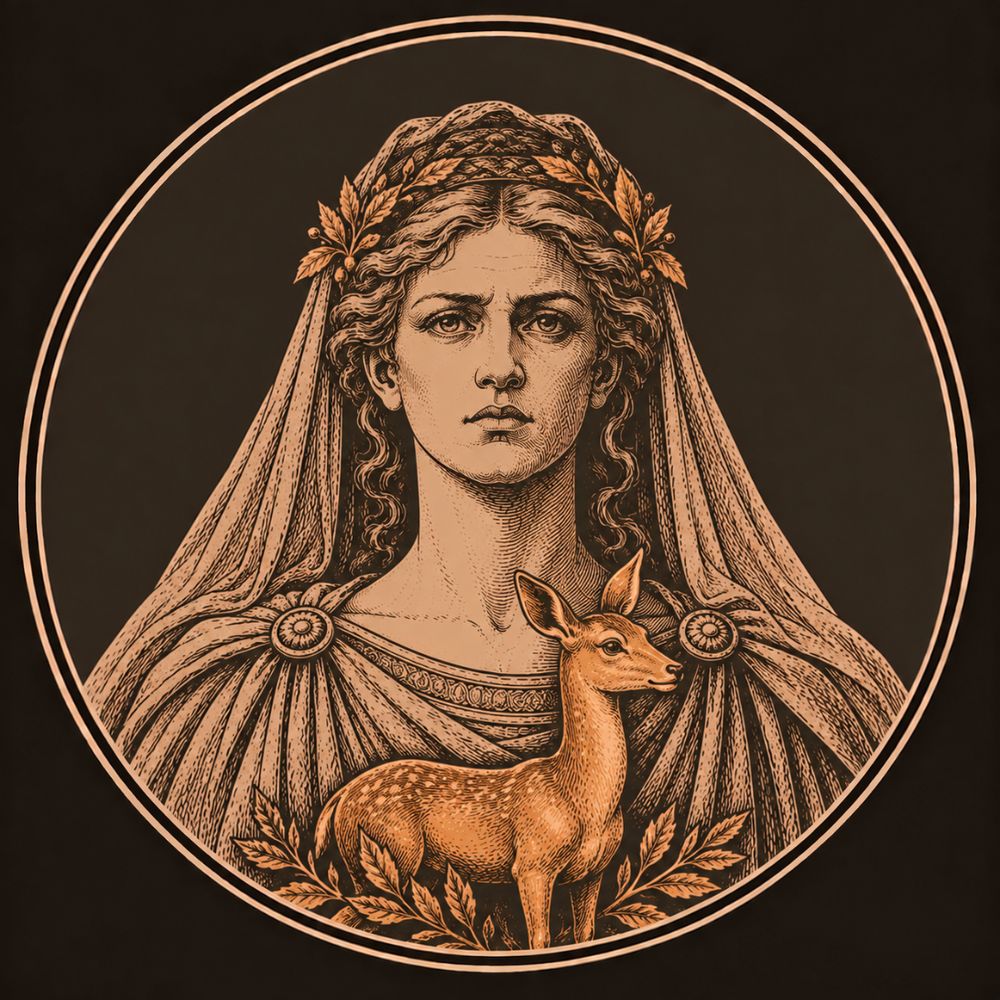
Iphigenia, bronze medallion illustration
Generated by AI from this page's own facts, not an ancient image or evidence of anything. How this site uses generated images
Sections on this page
See Iphigenia in the Greek family tree.
Core Myth
Iphigenia is a daughter of Agamemnon, king of Mycenae, and Clytemnestra. In the prologue of Euripides's Iphigenia in Tauris she gives her own descent, from Tantalus through Pelops and Atreus. Her sister is Electra, and her brother is Orestes.
Homer never tells her story. When Agamemnon offers Achilles a bride in Homer's Iliad, he names three daughters at home: Chrysothemis, Laodice and Iphianassa. The Iliad says nothing of a sacrifice. Sophocles's Electra counts Iphianassa as a living sister, still at home in the palace.
Her story begins at Aulis, where the Greek fleet gathered for Troy and could not sail. In Aeschylus's Agamemnon, winds from the Strymon hold the ships in port while the stores run out. The seer Calchas names Artemis as the cause and proposes a remedy worse than the storm. Agamemnon weighs his child against his allies and chooses the war.
The chorus describes what followed. She is gagged so she cannot curse the house, and lifted over the altar like a young goat. Her saffron robe falls, and her eyes plead with each of the men around her. Then the chorus stops: "What happened next I did not see and do not tell."
Euripides's Iphigenia at Aulis tells the same days from inside the camp. Agamemnon has written to his wife to send their daughter for a wedding to Achilles. The marriage is a pretence, known only to Calchas, Odysseus, Menelaus and himself. When Clytemnestra greets Achilles as her future son-in-law, he replies that he never courted her daughter. Angry that his name was used as bait, he vows that Agamemnon will not touch her.
Iphigenia settles it herself. She tells her mother she is resolved to die with honour. The fleet's passage and the fall of Troy depend on her, she says, and Achilles must not die fighting the army for her sake. The messenger's speech that closes the play says everyone heard the blow, but nobody saw her vanish. A great deer lay dying on the altar instead.
Euripides's Iphigenia in Tauris makes the rescue the start of a second life. Artemis gave the Greeks a deer in her place and carried her through the air to the land of the Taurians. Apollodorus's Epitome calls them a Scythian people who murder strangers. There King Thoas rules, and Iphigenia serves as priestess in the goddess's temple. Every Greek who lands must be consecrated by her for sacrifice.
Years later her brother Orestes arrives with Pylades. Apollo has told him to fetch the goddess's wooden image, as the price of escaping the Furies. Iphigenia writes a letter to Orestes and gives it to Pylades to carry to Argos, and so learns who the prisoner is. She tells Thoas the strangers are polluted by a mother's murder and must be washed in the sea with the statue. Brother and sister sail away with the image. Athena then sends her to Brauron in Attica, to keep the keys of Artemis's shrine. She will be buried there, and women will dedicate to her the robes of mothers who died in childbirth.
What is the tragedy of Iphigenia?
Her own father gives her up to win a war. At Aulis the Greek fleet cannot sail for Troy until Agamemnon offers his daughter to Artemis. In Euripides's Iphigenia at Aulis he lures her from home with a false promise of marriage to Achilles. Aeschylus's Agamemnon shows her gagged and lifted over the altar. Years later Clytemnestra kills her husband and names Iphigenia as her reason, which sets the family's chain of revenge moving.
Aeschylus, Agamemnon 184-249
Who was Iphigenia's father in Greek mythology?
Her father was Agamemnon, king of Mycenae and commander of the Greek army against Troy. Her mother was Clytemnestra. In the prologue of Euripides's Iphigenia in Tauris she gives the line herself: Tantalus, Pelops, Atreus, then Agamemnon. The same prologue says Calchas demanded her because her father had vowed Artemis the most beautiful thing born that year. The man who should protect her is the one who holds her over the altar.
Euripides, Iphigenia in Tauris 1-41
Did Achilles love Iphigenia?
Not in the oldest sources, and he never married her. The wedding was a lie Agamemnon told to bring her to Aulis, in Euripides's Iphigenia at Aulis and Apollodorus's Epitome. In Euripides, Achilles first hears of it from Clytemnestra and says he never courted the girl. He defends her because his name was misused, he says, not to win a bride. Only after her brave speech does he say he longs to marry her. She refuses his help and goes to the altar.
Euripides, Iphigenia at Aulis 1368-1432
Is Iphigenia in The Odyssey?
No. Homer's Odyssey tells of Agamemnon's murder more than once, through Nestor, Menelaus and the king's own ghost, but it never names Iphigenia or mentions Aulis. The Iliad does not tell her story either. When Agamemnon lists his daughters there, he names Chrysothemis, Laodice and Iphianassa. The earliest full telling of the sacrifice that survives is the chorus of Aeschylus's Agamemnon.
Homer, Iliad 9.144-145
Did Iphigenia die at Aulis?
The sources split. Aeschylus's Agamemnon treats her as dead, and Clytemnestra pictures her greeting her father in the underworld. Euripides's Iphigenia in Tauris says Artemis put a deer on the altar and carried her to the Taurians as her priestess. Apollodorus's Epitome agrees, and adds that some said Artemis made her immortal. Pausanias reports that Hesiod's Catalogue of Women turned her into Hecate, while the Megarians said she died in their city.
Apollodorus, Epitome 3.22
Later Traditions
The oldest surviving accounts already disagree on whether she died. Aeschylus's Agamemnon treats her as killed. Clytemnestra says her husband sacrificed his own child to charm the winds of Thrace. She even pictures Iphigenia meeting her father at the ford of sorrows and kissing him. In Sophocles's Electra, Clytemnestra speaks of her as "the dead girl". Euripides's Iphigenia in Tauris, Apollodorus's Epitome and the ending of Iphigenia at Aulis put a deer on the altar in her place. Apollodorus adds that some said Artemis made her immortal. His translator J. G. Frazer notes that the lost epic Cypria, as summarized by Proclus, told the deer story too.
Pausanias's Description of Greece collects further versions. The Megarians showed a shrine of the heroine Iphigenia and said she died in Megara. Pausanias adds that Hesiod's Catalogue of Women made her become Hecate by the will of Artemis. He also reports Herodotus's account that the Taurians sacrificed castaways to a maiden they said was Iphigenia.
Why Artemis wanted her is disputed too. In Aeschylus's Agamemnon the goddess is angry at an omen: two eagles that tore apart a pregnant hare. In Sophocles's Electra, Agamemnon shot a stag in her grove and boasted about the kill. Apollodorus's Epitome gives a boast after shooting a deer, and adds that Atreus had withheld a golden lamb from her. Euripides's Iphigenia in Tauris gives a vow instead. Agamemnon had promised Artemis the most beautiful thing born that year, and that was his daughter.
Her death drives the revenge that follows, but the sources weigh it differently. In Aeschylus's Agamemnon, Clytemnestra says her husband paid with his life for what he did to Iphigenia. In Sophocles's Electra she asks why Menelaus's two children did not die instead. Pindar's eleventh Pythian ode leaves the question open: was it Iphigenia's slaughter, or another man's bed?
The Roman poet Lucretius made her his first example of the crimes religion breeds. In the first book of On the Nature of Things he calls her Iphianassa. A father, he writes, felled his child on her bridal day to win fair winds for Troy.
Modern Influence
Iphigenia has been a stage heroine since the seventeenth century. Jean Racine's tragedy Iphigénie (1674) spares her by bringing a second girl of the same name to the altar. Christoph Willibald Gluck wrote two operas about her: Iphigénie en Aulide (1774) and Iphigénie en Tauride (1779). Johann Wolfgang von Goethe's Iphigenie auf Tauris, first written in prose in 1779, gives Euripides's plot a new ending. His Iphigenia refuses to deceive Thoas and wins her freedom by telling him the truth.
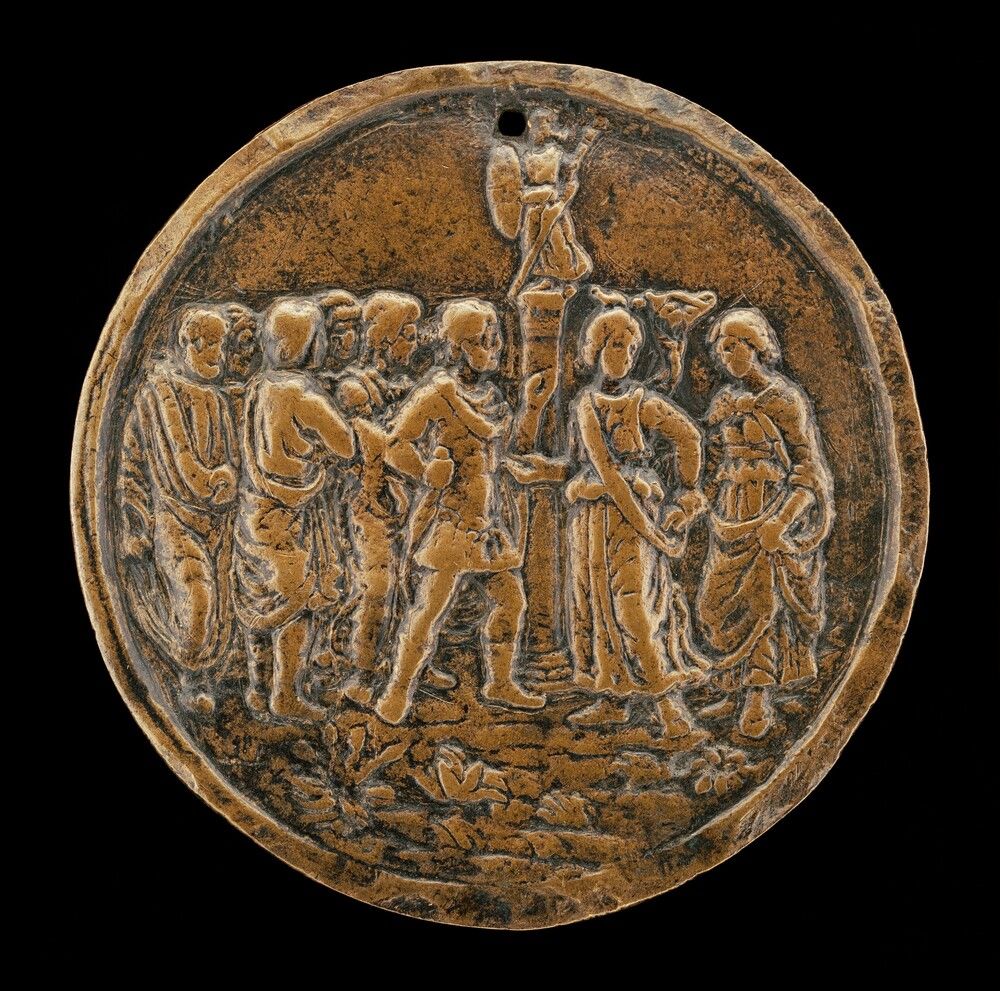
The Sacrifice of Iphigenia - Master of the Orpheus Legend, fourth quarter 15th century, bronze//Medium brown patina
National Gallery of Art, Washington, DC, 1957.14.231. CC0
Lineage
See the full family tree2 recorded relations, each with the ancient line behind it.
Parents
-

Iphigenia traces her own line from Tantalus through Pelops and Atreus in the prologue of Euripides's Iphigenia in Tauris. Homer's Iliad lists Agamemnon's daughters without her name.
-

In the prologue of Euripides's Iphigenia in Tauris, Iphigenia says Calchas claimed her as the fairest thing born that year in Agamemnon's house, and that Odysseus took her from Clytemnestra with a false promise of marriage.
Also Connected
2 recorded connections, each with the ancient line behind it.
Connected
-

Agamemnon brings Iphigenia to Aulis on the pretence that she will marry Achilles. In Euripides's Iphigenia at Aulis, Achilles knows nothing of the betrothal until Clytemnestra greets him.
-

Artemis claims Iphigenia as a victim at Aulis. In Euripides's Iphigenia in Tauris the goddess puts a deer on the altar in her place and makes her priestess of her temple among the Taurians.
Where Accounts Differ
- whether Iphigenia died at Aulis
- why Artemis demanded the sacrifice
- Clytemnestra's motive
- the ending of Iphigenia at Aulis
- Iphigenia and Iphianassa
- Whether Iphigenia died is disputed. Aeschylus's Agamemnon and Sophocles's Electra treat her as killed at Aulis. Euripides's Iphigenia in Tauris, Apollodorus's Epitome and the ending of Iphigenia at Aulis replace her with a deer. Apollodorus adds that some made her immortal. Pausanias reports that Hesiod's Catalogue of Women made her Hecate, and that the Megarians said she died in Megara.
- Artemis's grievance differs. Aeschylus's Agamemnon gives her anger at the omen of the eagles and the pregnant hare. Sophocles's Electra gives a stag shot in her grove and a boast. Apollodorus's Epitome gives a boast over a deer and Atreus's withheld golden lamb. Euripides's Iphigenia in Tauris gives Agamemnon's vow of the most beautiful thing born that year.
- Clytemnestra's motive is weighed differently. Aeschylus's Agamemnon and Sophocles's Electra give her the sacrifice of Iphigenia. Pindar's eleventh Pythian ode asks whether it was the sacrifice or an adulterous bed.
- The messenger's speech that ends Euripides's Iphigenia at Aulis, with the deer on the altar, is doubted as Euripides's own work. The translation served by Perseus prints it inside square brackets.
- The name is unsettled. Homer's Iliad lists Iphianassa among Agamemnon's living daughters, and Sophocles's Electra treats Iphianassa as a sister distinct from the dead girl. Lucretius uses Iphianassa as the name of the sacrificed daughter.
- Hesiod's Catalogue of Women, Herodotus and the Cypria are reported here only through Pausanias and Frazer's notes to Apollodorus. Lucretius is outside this site's source registry, so his poem is named in prose without a checked line reference.
Read the full source verification →
Mythology
Appears In
Related Terms
Referenced By
Sources
- Homer, Iliad 9.144-145
- Aeschylus, Agamemnon 104-159
- Aeschylus, Agamemnon 184-249
- Aeschylus, Agamemnon 1412-1425
- Aeschylus, Agamemnon 1521-1529
- Aeschylus, Agamemnon 1555-1559
- Pindar, Pythian Ode 11.22-11.25
- Sophocles, Electra 154-163
- Sophocles, Electra 530-576
- Euripides, Iphigenia at Aulis 87-110
- Euripides, Iphigenia at Aulis 819-860
- Euripides, Iphigenia at Aulis 919-974
- Euripides, Iphigenia at Aulis 1368-1432
- Euripides, Iphigenia at Aulis 1532-1612
- Euripides, Iphigenia in Tauris 1-41
- Euripides, Iphigenia in Tauris 769-797
- Euripides, Iphigenia in Tauris 1157-1202
- Euripides, Iphigenia in Tauris 1435-1474
- Apollodorus, Epitome 3.21
- Apollodorus, Epitome 3.22
- Apollodorus, Epitome 6.26
- Apollodorus, Epitome 6.27
- Pausanias, Description of Greece 1.43.1
- Lucretius, On the Nature of Things 1.84-101 (the Latin names her Iphianassa at 1.85)
- J. G. Frazer, notes to Apollodorus, Epitome 3.22 (on the Cypria as summarized by Proclus)