Argus Panoptes
Argus Panoptes was a giant covered in countless eyes, so many that some always stayed open even while others slept, making him an ideal watchman. Hera set him to guard Io, a woman Zeus had turned into a heifer to hide their affair, tethering her to a sacred olive tree. Zeus sent Hermes to free Io, and Hermes lulled every one of Argus's eyes to sleep before killing him.

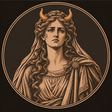
Argus Panoptes, the hundred-eyed giant
Generated by AI from this page's own facts, not an ancient image or evidence of anything. How this site uses generated images
Sections on this page
Core Myth
Argus Panoptes - his epithet means "all-seeing" - was a giant covered in a great number of eyes, arranged so that some always remained open and watching even while others closed in sleep, which made him an unmatched guardian. Ovid gives the number as a hundred; Aeschylus, in Prometheus Bound, simply calls him "myriad-eyed" without settling on an exact count. Hera's occasion to use him arose from one of Zeus's affairs: Zeus had fallen for a young woman named Io and, to hide the affair from his wife, turned her into a white heifer. Hera was not fooled, and asked for the heifer as a gift, a request Zeus could not easily refuse without confirming her suspicions. Once Io was in her possession, Hera set Argus to guard her, tethering the transformed girl to a sacred olive tree and trusting that a watchman with so many eyes could never be caught unaware.
Zeus sent Hermes to free Io, and Apollodorus and Ovid both describe Hermes approaching Argus in disguise, as an ordinary herdsman, and using music and a long, deliberately tedious story to lull the giant's eyes closed one by one. Ovid specifies that Hermes told the story of the nymph Syrinx, who was transformed into reed-pipes while fleeing the god Pan - a tale so unhurried that it eventually closed even Argus's countless eyes. Once every eye had finally shut, Hermes killed him, most accounts saying by beheading him with a curved blade, and freed Io to continue her wandering, still transformed, until she eventually reached Egypt and was restored to human form.
Why was Argus considered such an effective guard?
His many eyes did not all close at once - some stayed open and watchful even while others slept, so he was never fully unconscious the way an ordinary guard would be. Hera relied on exactly this quality when she chose him to watch over Io, expecting that no rescue attempt could slip past a watchman who could never be caught entirely off guard.
Ovid, Metamorphoses 1.567-712
How many eyes did Argus actually have?
Sources disagree. Ovid's fuller narrative settles on a hundred eyes, spaced so that some always stayed open while others slept in turn. Aeschylus, in Prometheus Bound, calls him simply "myriad-eyed" without giving an exact figure, treating his watchfulness as effectively countless rather than fixed at a specific number.
Ovid, Metamorphoses 1.567-712; Aeschylus, Prometheus Bound 566-567
Why did Hera want Io guarded in the first place?
Zeus had fallen for Io and turned her into a white heifer to hide the affair from his wife. Hera saw through the disguise but could not openly accuse Zeus, so she asked for the heifer as an innocent-seeming gift, a request he could not refuse without admitting guilt, and then set Argus to guard her once she had possession of the transformed girl.
Apollodorus, Library 2.1.3
How did Hermes get past a guard who was always at least partly awake?
Zeus sent Hermes disguised as an ordinary herdsman to approach Argus without suspicion. Hermes played music and told a long, deliberately tedious story - according to Ovid, the tale of the nymph Syrinx being transformed into reed-pipes - patiently continuing until every one of Argus's many eyes had finally closed in sleep, one after another rather than all at once.
Ovid, Metamorphoses 1.668-721
How did Argus die?
Once none of his eyes remained open to see the blow coming, Hermes killed him, most accounts saying by beheading him with a curved blade. Freed of her guard, Io was able to continue her wandering, though she remained transformed into a heifer for some time afterward before finally being restored to human form in Egypt.
Ovid, Metamorphoses 1.668-721
Why does the peacock have eye-shaped markings on its tail?
After Argus died, Hera gathered his many eyes and set them into the tail feathers of the peacock, her sacred bird, turning her loyal servant's death into a permanent memorial. The eye-shaped markings peacocks are known for today are explained in myth as literally being Argus's own eyes, preserved rather than lost.
Ovid, Metamorphoses 1.720-723
Later Traditions
Hera's response to Argus's death became the myth's most enduring legacy: she gathered his many eyes and set them into the tail feathers of her sacred bird, the peacock, turning a loyal servant's death into a permanent, decorative memorial. Argus does not appear elsewhere in Greek myth as an independent figure with stories of his own; guarding and dying for Hera is his entire mythological role. His name survives in English partly through the general use of "argus-eyed" to describe extreme, unblinking vigilance, a usage that traces directly back to the specific detail of his many watchful eyes rather than to any other part of his story.
Also Connected
3 recorded connections, each with the ancient line behind it.
Allies
-

Argus served as Hera's loyal guardian, set to watch over the transformed Io on her orders.
Connected
-
Argus was set by Juno to guard Io in her heifer form, watching her with his hundred eyes.
-

Argus's entire mythological role exists because of Zeus's affair with Io, which prompted Hera to set him as her guard.
Where Accounts Differ
- a hundred eyes (Ovid) vs. myriad, countless eyes (Aeschylus)
- Ancient sources disagree on Argus's eye count: Ovid's fuller narrative settles on a hundred eyes, while Aeschylus's Prometheus Bound calls him 'myriad-eyed' without giving an exact number.
Read the full source verification →
Mythology
Killed By
Related Terms
Referenced By
Sources
- Ovid, Metamorphoses 1.567-712
- Apollodorus, Library 2.1.3
- Aeschylus, Prometheus Bound 566-567