Nemesis
Nemesis is one of the children Night (Nyx) bears alone in Hesiod's Theogony, a goddess who exists to check unearned fortune and unpunished wrongdoing. In the Works and Days, she and Aidos (Shame) abandon a morally exhausted humanity as the last sign of the Iron Age's collapse. A later, separate tradition makes her, not Leda, the mother Zeus pursues to father Helen.

Nemesis, goddess of righteous retribution
Generated by AI from this page's own facts, not an ancient image or evidence of anything. How this site uses generated images
Sections on this page
See Nemesis in the Greek family tree.
Core Myth
Hesiod's Theogony places Nemesis among the small catalogue of children Night (Nyx) bears entirely on her own, without a father: Nemesis, "to afflict mortal men," appears in the same unbroken list as the Moirai (the Fates), Thanatos (Death), Apate (Deceit), and Eris (Strife), each a primordial force rather than a character with a developed story of their own. Where the Moirai govern the fixed span of a life and Thanatos ends it, Nemesis's domain is narrower and more moral: she exists to answer excess, restoring balance whenever a mortal, or a god, claims more good fortune, honor, or impunity than is properly theirs, the offense Greek myth calls hubris. Her clearest myth-in-action, rather than abstraction, is granting a rejected suitor's prayer to curse Narcissus with hopeless love for his own reflection, Ovid's version of exactly the kind of unearned favor her domain exists to answer.
Hesiod returns to her by name once more, in the Works and Days, in the passage describing the final stage of humanity's decline through the five ages. As the Race of Iron reaches its worst point, "Aidos and Nemesis, their sweet forms wrapped in white robes," abandon the wide-pathed earth for Olympus, leaving mortals with no defense against evil. Aidos personifies shame, the internal restraint that keeps a person from wrongdoing; Nemesis personifies the external check, the retribution that follows once shame has already failed. Their joint departure is Hesiod's image of a world with no working moral guardrails left, human or divine.
Who are Nemesis's parents?
Night (Nyx) alone. Hesiod's Theogony names Nemesis among the small group of children Night bears without any father at all, born specifically, in the poem's own words, "to afflict mortal men."
Hesiod, Theogony 223-224
What does Nemesis actually represent?
Retribution against excess rather than punishment in general. In the Works and Days, Hesiod pairs her with Aidos (Shame) as the two forces that check human wrongdoing, Aidos from within and Nemesis from without, and treats their departure from the earth as the clearest sign that the Iron Age has run out of moral restraint entirely.
Hesiod, Works and Days 197-201
Is Nemesis related to the Moirai, the three Fates?
They are siblings by Hesiod's own account, both born of Night alone in the same unbroken catalogue of the Theogony, though their domains differ: the Moirai fix how long a life runs, while Nemesis answers what a person does with the fortune they are given.
Hesiod, Theogony 211-225
Is Nemesis Helen of Troy's real mother?
In one variant, yes. Apollodorus records a version in which Zeus pursues Nemesis through a series of transformations, finally uniting with her as a swan while she is a goose; the resulting egg is found by a shepherd, given to Leda, and hatched into Helen, whom Leda then raises as her own. The far more common account, in which Zeus visits Leda directly, makes Leda Helen's mother instead, and the two traditions were never reconciled by any ancient source.
Apollodorus, Library 3.10.7
Why do Aidos and Nemesis leave the earth in Hesiod's Works and Days?
As the final marker of the Iron Age's collapse. Hesiod's Myth of Ages ends with humanity so degraded, envy, violence, and disregard for oaths and parents, that the two goddesses who had restrained wrongdoing simply give up and withdraw to Olympus, and Hesiod says outright that what is left for mortals afterward is grievous sorrow with no remedy.
Hesiod, Works and Days 197-201
Later Traditions
A separate, much later tradition gives Nemesis an actual narrative, one that has little to do with her role as an abstract moral force. In Apollodorus's Library, Zeus desires Nemesis, and she flees him by changing shape repeatedly, across land and sea, until she becomes a goose; Zeus, in the form of a swan, catches her in that shape, and their union produces an egg. A shepherd finds it and brings it to Leda, who keeps it in a chest until Helen hatches from it and Leda raises her as her own daughter. This version quietly displaces the far more familiar account, in which Zeus visits Leda herself as a swan and Helen is born to Leda directly. Apollodorus records both without reconciling them, which is itself typical of how far an already-old myth could diverge by the time a later mythographer tried to catalogue every version of it in one place.
Lineage
See the full family tree3 recorded relations, each with the ancient line behind it.
Parents
-

Hesiod's Theogony names Nemesis among the children Night bears entirely alone, with no father, born specifically to afflict mortal men.
Siblings
-
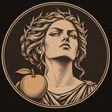
Hesiod names Nemesis and Strife in the same list of Night's children.
-

disputed
Hesiod's Theogony lists Nemesis in the same unbroken catalogue of children Night bears without a father, a few lines after Death and Sleep in the same passage.
Also Connected
2 recorded connections, each with the ancient line behind it.
Connected
-
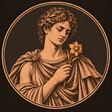
In Ovid, a youth Narcissus scorned prays that Narcissus may love and never win what he loves, and Nemesis grants the prayer.
-

In a variant tradition recorded by Apollodorus, Zeus pursues Nemesis across land and sea through a series of shape changes; their union as swan and goose produces the egg from which Helen is later hatched.
Where Accounts Differ
- whether Nemesis or Leda is Helen's biological mother
- Apollodorus's swan-and-goose version, making Nemesis Helen's biological mother, is a real variant preserved in the ancient sources, not an invented reading; it is presented here alongside, not in place of, the far better-known Leda account.
Read the full source verification →
Mythology
Appears In
Related Terms
Referenced By
Sources
- Hesiod, Theogony 223-224
- Hesiod, Theogony 211-225
- Hesiod, Works and Days 197-201
- Apollodorus, Library 3.10.7
- Ovid, Metamorphoses 3.370-436
- Timothy Gantz, Early Greek Myth (1993)