Chaos
Chaos is not a god with a personality or a story in the way Zeus or Athena are; Hesiod's Theogony opens by naming Chaos as the very first thing to come into being, followed immediately by wide-bosomed Gaia (Earth), dim Tartarus, and Eros. Chaos itself then gives birth, without a partner, to Erebus (primordial Darkness) and black Night, who in turn bear Aether (the bright upper air) and Day. From there, Hesiod's genealogy moves on to Gaia's own children - Uranus, the mountains, the sea - and eventually to the Titans and the gods who rule the world today, with Chaos itself never appearing again as an actor in any later myth.

Chaos, the First Being
Generated by AI from this page's own facts, not an ancient image or evidence of anything. How this site uses generated images
Sections on this page
See Chaos in the Greek family tree.
Core Myth
Hesiod's Theogony begins the history of the gods by naming what existed before anything else: "first of all Chaos came to be, but next wide-bosomed Gaia," along with dim Tartarus in the earth's depths and Eros, the fairest of the deathless gods. Chaos itself has no parent and no partner; it simply exists first. The order of births that follows, down to the Titans, is told in Creation from Chaos. From Chaos alone come Erebus, the personification of primordial darkness, and black Night, and Night in turn bears Aether, the bright air of the upper sky, and Day, by her union with Erebus.
What came into being before Chaos?
Nothing. Hesiod's Theogony opens its account of the gods by naming Chaos as the very first thing to exist, with no parent and nothing preceding it.
Hesiod, Theogony 116-117
Is Chaos the same thing as empty space, or as disorder?
Neither meaning is quite right for Hesiod's original use. The Greek word describes a yawning gap or chasm rather than either empty space in the modern physical sense or disorder in the modern everyday sense; Hesiod uses it as the name of the first being, not as a description of a formless mess.
Hesiod, Theogony 116-117
Who are Chaos's children?
Erebus, the personification of primordial darkness, and black Night, born to Chaos without any partner. Night then bears Aether, the bright upper air, and Day, through her union with Erebus.
Hesiod, Theogony 123-125
Does Chaos do anything in later Greek mythology?
Essentially no. Beyond existing first and, without a partner, giving rise to Erebus and black Night, Chaos never reappears as an active character anywhere in Hesiod's poem, which moves on immediately to Gaia's own line of descendants.
Hesiod, Theogony 116-125
Later Traditions
Chaos never reappears as a character with a will or a voice anywhere else in Hesiod's poem; it functions purely as the starting point of a genealogy that runs on through Gaia's own children, the Titans, and finally the gods who rule after Zeus. The Theogony's own overall shape is a single continuous line from that first formless gap to a settled cosmic order: after the gods defeat the Titans, Hesiod says it was Gaia herself who urged them to make Zeus king, closing the poem's genealogy with the same Earth that had emerged in Chaos's own opening breath. A very different, comic cosmogony survives from the fifth century: in Aristophanes' The Birds, the chorus of birds claims that Chaos, Night, Erebus, and Tartarus existed before Earth, Air, or Heaven at all, and that Night laid a wind-egg in Erebus's bosom from which Eros hatched - a parody of Hesiod's account that nonetheless keeps Chaos in the same first position.
1 recorded relation, each with the ancient line behind it.
Children
-

Hesiod names Night as coming directly from Chaos, alongside her brother Erebus.
Also Connected
7 recorded connections, each with the ancient line behind it.
Connected
-

Erebus comes forth from Chaos together with his sister Night, immediately after Chaos, Earth, Tartarus, and Eros in Hesiod's account of the first beings.
-

Eros is named alongside Chaos, Earth, and Tartarus as one of the first four beings to exist in Hesiod's cosmogony.
-

Hesiod's Theogony opens its genealogy of the gods by naming Chaos as the first being to exist, with Gaia coming into being immediately after.
-
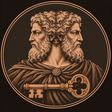
In Ovid's Fasti, Janus says the ancients called him Chaos, the undivided mass of the elements from which he took a god's shape.
-

Hesiod traces one unbroken genealogy from Chaos's initial emergence down through Gaia's and Ouranos's line to Kronos, born the youngest and most fearsome of the Titans.
-

Ouranos is born to Gaia alone within the same short opening passage of the Theogony in which Chaos comes to be first of all.
-

The Theogony's genealogy runs as one continuous line from Chaos's first appearance to its own resolution, the gods, prompted by Gaia, pressing Zeus to reign as king.
Where Accounts Differ
- whether Chaos means a physical gap or a state of disorder
- Chaos has no gender-specific action or personality in Hesiod's text; this page follows the site's pipeline convention for primordial deity pages rather than asserting a mythological gender the sources do not give it.
- The Birds reference is checked the same way every other citation here is: the play is registered in content/_meta/source-registry.json and the passage resolves live against the Perseus edition, which returns the chorus's cosmogony beginning with Chaos, Night, Erebus and Tartarus.
Read the full source verification →
Mythology
Appears In
Related Terms
Sources
- Hesiod, Theogony 116-117
- Hesiod, Theogony 123-125
- Hesiod, Theogony 881-885
- Aristophanes, Birds 693-702
- Timothy Gantz, Early Greek Myth (1993)