Janus
Janus is the Roman god of doorways, gates and beginnings, shown with two faces that look in opposite directions. In Ovid's Fasti he opens the year and keeps the gate of heaven. Livy says King Numa made his shrine a sign of war and peace: open in war, shut in peace. Ovid himself says Greece had no god to match him.
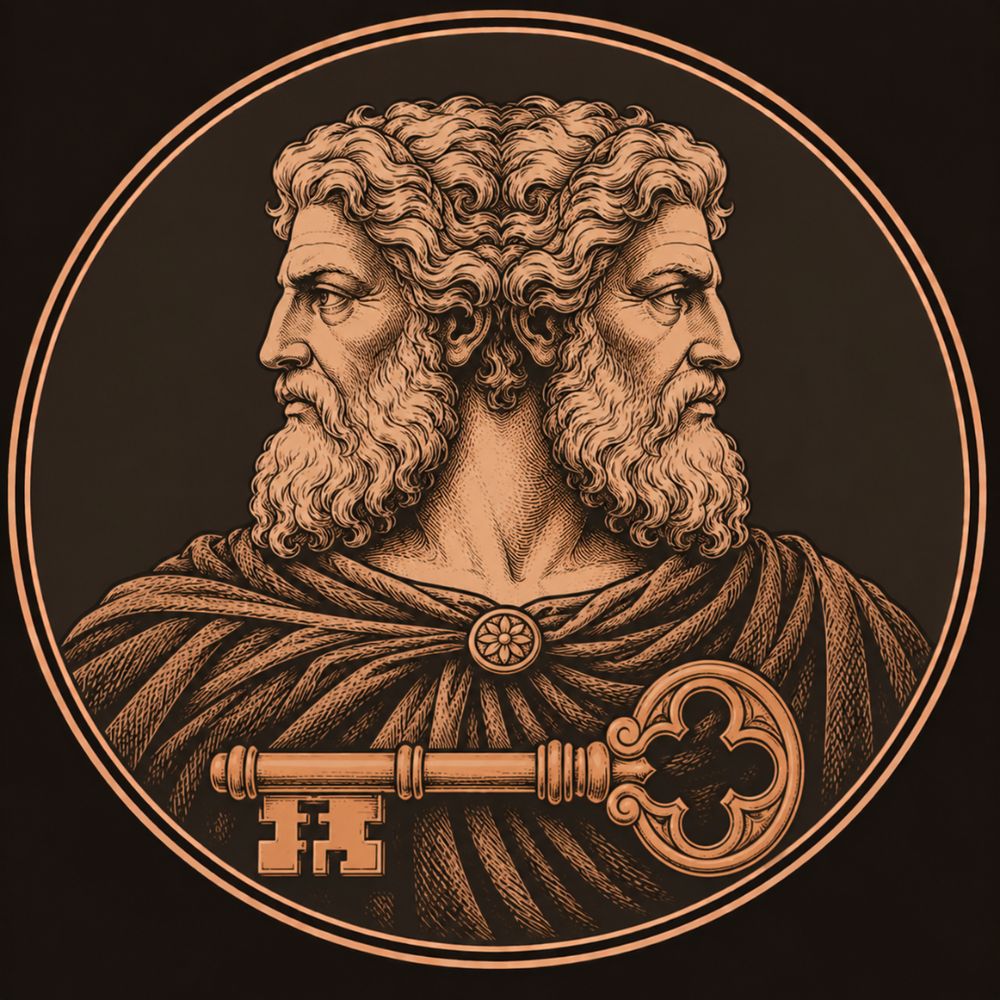
Janus, bronze medallion illustration
Generated by AI from this page's own facts, not an ancient image or evidence of anything. How this site uses generated images
Sections on this page
Core Myth
Ovid opens his poem on the Roman calendar with Janus, because the year begins with him (Fasti 1.63-64). He hails him as two-headed Janus, source of the silently gliding year, the only god who sees his own back (Fasti 1.65-66). Then he asks what kind of god Janus is, since Greece has no deity to match him (Fasti 1.89-90). Janus appears in answer, holding a staff in his right hand and a key in his left (Fasti 1.95-100).
His account begins with the universe. The ancients called him Chaos, he says, for he is a thing of great age (Fasti 1.103). Air, fire, water and earth were once a single heap. When they separated, the shapeless ball he had been took on a face and limbs fit for a god (Fasti 1.105-112). His two faces keep a small trace of that confused shape, since his front and back look the same (Fasti 1.113-114).
His office is the second reason. Sky, sea, clouds and lands are all opened and closed by his hand (Fasti 1.117-118). When he lets Peace out of her house, she walks free. Without his bolts holding wars shut in, the world would be soaked in blood (Fasti 1.121-124). He guards the gates of heaven with the Hours, and Jupiter himself comes and goes through his office (Fasti 1.125-126). The priest therefore calls him Patulcius, the opener, and Clusius, the closer (Fasti 1.129-130). Like a doorkeeper by a threshold, he watches east and west at once (Fasti 1.135-140).
Janus also tells of his reign on earth. His citadel was the hill that still carries his name, the Janiculum (Fasti 1.245-246). He ruled when gods mixed with men and Justice had not yet fled the earth (Fasti 1.247-250). He had nothing to do with war. He guarded peace and doorways, and his key was his only weapon (Fasti 1.253-254). It was in this land that he received the exiled Saturn (Fasti 1.235-236).
His one act of war came when Titus Tatius led the Sabines against Rome. A guard bribed with bracelets showed them the silent path up to the citadel (Fasti 1.259-262). Saturn's daughter Juno had removed the bolts from the gate (Fasti 1.265-266). Janus would not fight so great a goddess. Instead he opened the mouths of his springs and poured out sudden water. He first put sulphur into the channels, so the hot flood blocked Tatius's path (Fasti 1.267-272). Once the Sabines were driven off, the place returned to its old form, and Rome built him an altar beside a small shrine (Fasti 1.273-275).
Was Janus a Roman god?
Yes. Janus was a native Roman god, and Roman writers knew he had no Greek model. Ovid asks what god to call him, since Greece has no deity to match him (Fasti 1.89-90). Cicero says the Romans made Janus first in every sacrifice, because beginnings matter most (De Natura Deorum 2.67). In the Fasti, Janus explains that worshippers offer him incense first so that they can reach any other god through him (Fasti 1.171-174). Some ancient writers still treated him as an early king of Italy who was later honoured as a god. Plutarch calls him a demigod or a king of remote antiquity (Life of Numa 19.6).
Ovid, Fasti 1.89-90
Why does Janus have two faces?
Ancient writers gave several reasons. In Ovid's Fasti, Janus offers two himself. His faces are a trace of the time he was Chaos, when his front and back looked the same (Fasti 1.111-114). They also suit his office, since every door has two fronts. Like a doorkeeper, he watches east and west without turning his neck (Fasti 1.135-144). Macrobius adds other views. One says a wise king knew the past and foresaw the future (Saturnalia 1.7.20). Another makes Janus the sun, opening the day at dawn and closing it at dusk (Saturnalia 1.9.9). Plutarch says the faces show that Janus moved human life from one condition into another (Life of Numa 19.6).
Ovid, Fasti 1.133-144
Was there a Greek version of Janus?
Not directly. Ovid states that Greece has no deity equal to Janus (Fasti 1.89-90). Janus himself compares his two faces with the three faces of Hecate, who watches the crossroads (Fasti 1.141-144). Macrobius reports that the scholar Nigidius identified Janus with Apollo. The Greeks worshipped an Apollo of the doorway, with altars set before their doors, while Diana held power over roads (Saturnalia 1.9.5-8). The Greek version of Augustus's own record renders Janus Quirinus as the Gate of Enyalios, a name for a war god (Res Gestae 13). These are comparisons, not a Greek twin.
Ovid, Fasti 1.89-90
Who is Janus' wife?
The ancient sources rarely give Janus a wife. The Christian writer Arnobius lists what pagans told of him. Janus was a son of Caelus and Hecate, the first king in Italy and founder of the town Janiculum. He was also father of Fontus, son-in-law of Volturnus and husband of Juturna (Against the Pagans 3.29). Ovid names a different partner. In the Metamorphoses, the nymph Venilia is said to have borne Janus a daughter on the Palatine hill (Metamorphoses 14.333-334). That daughter was Canens, famous for her singing, who married Picus of Laurentum (Metamorphoses 14.336-338). Ovid's Fasti tells of Janus seizing the nymph Crane, but she is never called his wife (Fasti 6.119-128).
Ovid, Metamorphoses 14.333-334
What were the Gates of Janus?
They were the doors of Janus's shrine in Rome, left open in war and shut in peace. Livy says King Numa built it at the foot of the Argiletum for exactly that purpose (Ab Urbe Condita 1.19.2). Virgil calls them the twin Gates of War, held by a hundred bronze bars, which the consul opens when the senate votes for war (Aeneid 7.607-614). Ovid's Janus gives a reason. The doors stand open so that the army has a way home, and shut in peace so that peace cannot leave (Fasti 1.277-282). Closing them was rare. Livy counts two closings after Numa (Ab Urbe Condita 1.19.3), and Augustus claims three more in his own time (Res Gestae 13).
Virgil, Aeneid 7.607-622
Is January named after Janus?
Ancient writers say so. Plutarch states that the first month, January, is named from Janus (Life of Numa 19.5). Ovid says King Numa did not pass over Janus when he placed two new months before the old ones (Fasti 1.43-44). Macrobius says Numa named the first of these Januarius and made it the first month of the year. It belonged to the two-headed god who looks both ways (Saturnalia 1.13.3). Ovid also asked why the year starts in cold winter rather than spring. Janus answered that midwinter is the first day of the new sun and the last of the old (Fasti 1.149-164).
Ovid, Fasti 1.43-44
Later Traditions
Virgil gives Janus's shrine its most famous description. Latium, he says, had twin Gates of War, held sacred by religion and dread of Mars. A hundred bronze bars and iron bolts kept them shut, and Janus never left the threshold as their guard (Aeneid 7.607-610). When the senators had decided on war, the consul himself, in the Quirinal robe and Gabine belt, unbarred the creaking doors (Aeneid 7.611-614). King Latinus was urged to open them against the Trojans of Aeneas. He refused and shut himself away in darkness, so Juno came down from the sky and burst the iron-bound doors herself (Aeneid 7.616-622). The same king kept an old cedar image of two-fronted Janus in his palace, beside old Saturn (Aeneid 7.177-181).
Livy credits the shrine to Numa, Rome's second king. To soften a people made fierce by war, Numa set up the Janus at the foot of the Argiletum as a sign of peace and war. Open, it meant Rome was under arms. Shut, it meant every neighbouring people was at peace (Ab Urbe Condita 1.19.2). Livy adds that it had been shut only twice since Numa. The first time was in the consulship of Titus Manlius after the First Punic War. The second was under Augustus after Actium (Ab Urbe Condita 1.19.3). Augustus gives his own count. It was shut twice in all before his birth, and three times on the senate's order while he led the state (Res Gestae 13).
Ovid's Metamorphoses retells the Sabine attack with a different cast. Juno opens the gate without a sound, and Venus alone notices. Venus asks the nymphs whose spring lay next to the shrine of Janus for help. They release their waters and heat them with sulphur and burning pitch, until the doorposts of Janus smoke with the spray (Metamorphoses 14.778-797). The flooded gate holds the Sabines back until the Roman soldiers are armed, and then Romulus offers battle (Metamorphoses 14.797-800).
Ovid's Fasti also tells of a nymph named Crane, who escaped her suitors by sending them ahead into a cave and then hiding. The trick failed with Janus, who sees what happens behind his back. He found her hiding place and seized her (Fasti 6.119-126). As the price of her virginity, he gave her power over the hinge and a branch of whitethorn to keep harm from doorways (Fasti 6.127-130).
Later writers explained Janus's place at the head of Roman worship. Cicero says that beginnings and endings matter most in everything, so the Romans made Janus first in sacrifice. He derives the name from going (ab eundo), which is why passages are called iani and house doors ianuae (De Natura Deorum 2.67). Macrobius, writing around 400 CE, reports that Janus was invoked first in any rite so that prayers could pass through his doors to the other gods (Saturnalia 1.9.9). He lists the titles used in worship: Geminus, Pater, Junonius, Consivius, Quirinus, Patulcius and Clusivius (Saturnalia 1.9.15). He also says that after Saturn vanished from Latium, Janus founded an altar to him with rites he named the Saturnalia (Saturnalia 1.7.24).
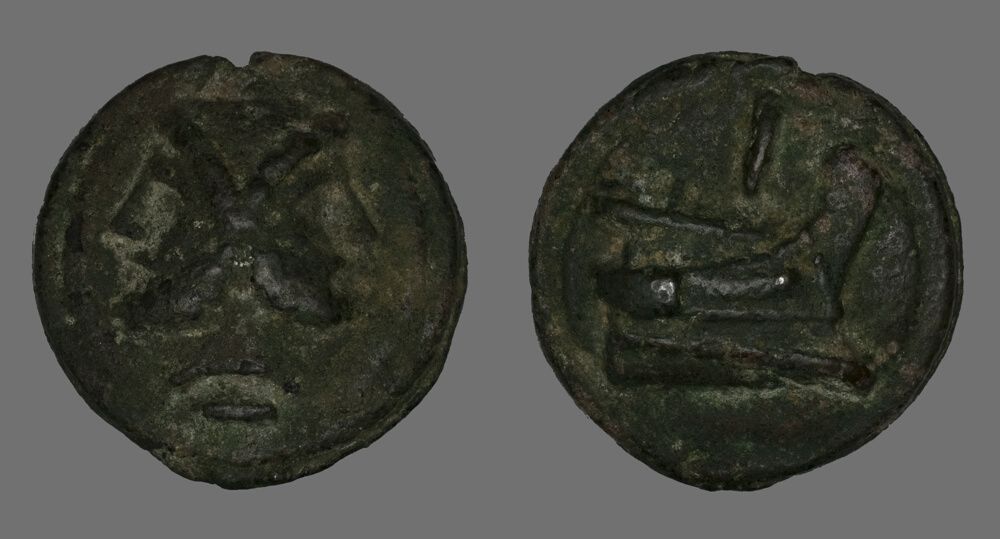
As (Coin) Depicting the God Janus - Italy, 225-217 BCE, Bronze
The Art Institute of Chicago, Chicago, IL, 1923.1231. CC0
Also Connected
6 recorded connections, each with the ancient line behind it.
Allies
-
When the Sabines of Titus Tatius reach Rome's opened gate, heated springs beside the shrine of Janus hold them back until Romulus's soldiers are armed.
-
Evander shows Aeneas two ruined strongholds, one founded by Janus and one by Saturn (Aeneid 8.357-358). In Ovid's Fasti, Janus says he received the exiled Saturn in the land he ruled (Fasti 1.235-236).
Connected
-

In Ovid's Fasti, Janus says the ancients called him Chaos, the undivided mass of the elements from which he took a god's shape.
-

Juno bursts open the Gates of War that Janus guards (Aeneid 7.620-622). In Ovid's Fasti she removes the bolts from Rome's gate for the Sabines, and Janus blocks them with hot springs (Fasti 1.265-272).
-
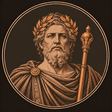
Latinus is urged to open the Gates of War that Janus guards, refuses, and hides away, so Juno opens them herself.
-
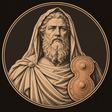
Livy credits Numa with the shrine of Janus, open in war and shut in peace, as a sign of the peace he wanted for Rome.
Where Accounts Differ
- Janus as Chaos, the sun, the sky or an early king
- why Janus has two faces
- who raised the hot springs against the Sabines
- how often the Gates of Janus were closed
- who opens the Gates of War and where the shrine stood
- Juturna or Venilia as Janus's partner
- where the name Janus comes from
- Ancient writers disagree on what Janus is. In Ovid's Fasti he says he was once Chaos, the undivided mass of the elements (Fasti 1.103-114). Macrobius reports that some identified him with the sun (Saturnalia 1.9.9), others with the world, meaning the sky (Saturnalia 1.9.11), and the scholar Nigidius with Apollo and Diana (Saturnalia 1.9.5-8). Arnobius records the views that he was the world, the year or the sun (Against the Pagans 3.29). A separate tradition makes him a human king. Macrobius, following Hyginus and Protarchus of Tralles, says Janus ruled Italy, first with Camese and then alone (Saturnalia 1.7.19-20). Plutarch leaves it open whether he was a demigod or a king (Life of Numa 19.6).
- The two faces have rival explanations. Ovid's Janus gives two: a trace of his shapeless origin (Fasti 1.111-114), and his office as doorkeeper who sees both ways (Fasti 1.135-144). Macrobius adds a king who knew past and future (Saturnalia 1.7.20; 1.9.4), the sun opening and closing the day (Saturnalia 1.9.9), and, citing Gavius Bassus, a doorkeeper of the upper and lower worlds (Saturnalia 1.9.13). He also mentions a four-faced statue brought from Falerii (Saturnalia 1.9.13). Plutarch reads the faces as a passage from a savage life to a civil one (Life of Numa 19.6).
- The hot springs that stopped the Sabines have different makers. In the Fasti, Janus opens the springs himself and heats them with sulphur, after Juno has removed the gate's bolts (Fasti 1.265-272). In the Metamorphoses, Juno opens the gate, Venus notices, and the nymphs of a spring beside Janus's shrine heat their waters with sulphur and pitch at her request (Metamorphoses 14.781-797). Macrobius places the event at a gate below the Viminal hill, later called the Janualis. The gate would not stay shut, and a torrent burst from the temple of Janus and scalded the Sabines (Saturnalia 1.9.17-18).
- The sources count the closings of the Gates of Janus differently. Livy says Numa built the shrine and that it was shut twice after him: under the consul Titus Manlius after the First Punic War, and under Augustus after Actium (Ab Urbe Condita 1.19.2-3). Plutarch says it stayed shut for all forty-three years of Numa's reign. After him it closed briefly under the consuls Marcus Atilius and Titus Manlius, and again under Augustus after he defeated Antony (Life of Numa 20.1-2). Augustus says it had been shut twice before his birth, and three times by senate order under him (Res Gestae 13).
- Who opens the gates also varies. In Virgil the consul unbars them once the senate votes for war (Aeneid 7.611-614). King Latinus refuses the task, and Juno breaks them open herself (Aeneid 7.616-622). The shrine's location differs too. Livy's Latin places it at the foot of the Argiletum (Ab Urbe Condita 1.19.2); the English translation on Perseus renders this as 'the foot of the Aventine', which the Latin does not say. Ovid's Janus says his temple stands joined to two forums (Fasti 1.257-258).
- Janus's family is thinly attested. Arnobius calls him son of Caelus and Hecate, father of Fontus, son-in-law of Volturnus and husband of Juturna (Against the Pagans 3.29). Ovid instead has the nymph Venilia bear him a daughter, Canens (Metamorphoses 14.333-338). Neither Ovid nor Virgil calls anyone Janus's wife.
- Ancient writers explain the name Janus in different ways. Cicero derives it from going (ab eundo) and links it to iani, passages, and ianuae, doors (De Natura Deorum 2.67). Macrobius cites Cornificius for the claim that Cicero called him Eanus, and Nigidius for a female counterpart Jana, identified with Diana (Saturnalia 1.9.8, 1.9.11). In the Fasti, Janus ties his name to his office of guarding doors (Fasti 1.125-127).
Read the full source verification →
Mythology
Referenced By
Sources
- Ovid, Fasti 1.43-44
- Ovid, Fasti 1.63-66
- Ovid, Fasti 1.89-144
- Ovid, Fasti 1.149-174
- Ovid, Fasti 1.235-282
- Ovid, Fasti 6.101-130
- Ovid, Metamorphoses 14.333-338
- Ovid, Metamorphoses 14.778-804
- Virgil, Aeneid 7.177-181
- Virgil, Aeneid 7.607-622
- Virgil, Aeneid 8.355-358
- Livy, Ab Urbe Condita 1.19.2-3
- Cicero, De Natura Deorum 2.67