Jupiter
Jupiter is the supreme deity of Roman state religion, worshipped as Jupiter Optimus Maximus - 'Best and Greatest' - from a temple on the Capitoline Hill shared with Juno and Minerva. Romans identified him with the Greek Zeus and adopted his myths, but Jupiter's distinct role was civic: he witnessed oaths, sanctioned treaties, and gave triumphing generals their authority to rule in his name for a day.

Jupiter, king of the Roman gods
Generated by AI from this page's own facts, not an ancient image or evidence of anything. How this site uses generated images
Sections on this page
Greek vs Roman: Zeus vs. Jupiter → See how Zeus differs.
What does the name "Jupiter" mean? →
Looking for a name of your own? Try the mythological name generator.
Core Myth
Jupiter inherited the mythology of Zeus through interpretatio romana, the Roman practice of identifying their own gods with Greek equivalents: he overthrew his father Saturn (the Roman Kronos), divided the cosmos with his brothers Neptune and Pluto, and ruled the sky with the thunderbolt. But Roman religion built a civic office around him that Zeus never carried in Greek cult. Livy records that King Tarquinius Priscus vowed a temple to Jupiter on the Capitoline Hill, and his son Tarquinius Superbus built it; it was dedicated in 509 BCE, the first year of the Republic, by the consul Marcus Horatius Pulvillus. From that temple Jupiter Optimus Maximus - 'Jupiter Best and Greatest' - presided over the Capitoline Triad alongside Juno and Minerva, and every consul opened his year of office there with a sacrifice.
Jupiter's Roman function was to guarantee the state's word. Treaties were sworn in his name, and a general granted a triumph rode to the Capitoline temple dressed as Jupiter himself, his face reddened with the same pigment used on the god's cult statue, to lay his victory at the god's feet. Cicero, writing philosophically about Roman religion, treats Jupiter's name itself as evidence of this civic role, deriving 'Iuppiter' from a phrase meaning 'father who helps' and treating the sky-god function as inseparable from the state's own authority. Livy says King Numa dedicated an altar to Jupiter Elicius on the Aventine to draw out the god's signs (Ab Urbe Condita 1.20.7).
Is Jupiter the same as Zeus?
Romans identified Jupiter with Zeus through interpretatio romana and told the same core myths about him - overthrowing his father, dividing the world with his brothers, ruling from the sky. But Jupiter carried a civic role Zeus never held in Greek religion: he was the formal guarantor of Roman oaths and treaties, worshipped from a state temple rather than primarily through myth and festival.
Cicero, De Natura Deorum 2.64
What was the Capitoline Triad?
The Capitoline Triad was Jupiter, Juno, and Minerva, worshipped together in the great temple on Rome's Capitoline Hill. Jupiter occupied the central cella of the three-chambered temple, with Juno and Minerva in the chambers to either side, and the arrangement gave Roman civic religion a single, shared architectural center for its three most important deities.
Livy, Ab Urbe Condita 1.55
What does 'Jupiter Optimus Maximus' mean?
It means 'Jupiter Best and Greatest,' the god's chief cult title at his Capitoline temple. The title marked him as supreme among Roman gods in a way that mattered practically, not just poetically: consuls opened their term of office with a sacrifice there, and it was the destination of a triumphing general's procession through the city.
Livy, Ab Urbe Condita 1.55
Why did Roman magistrates swear oaths by Jupiter?
Jupiter was considered the divine witness of Roman treaties and public oaths, so invoking him made an agreement binding under threat of his punishment for perjury. This civic function is why Jupiter's temple, not a myth about him, was the center of his Roman worship - the god mattered to the state primarily as a guarantee that promises would be kept.
Cicero, De Natura Deorum 2.64
When was Jupiter's temple on the Capitoline built?
Livy records that King Tarquinius Priscus vowed the temple in the sixth century BCE and his son Tarquinius Superbus built it, but it was not dedicated until 509 BCE, the first year of the Roman Republic, by the consul Marcus Horatius Pulvillus - meaning Rome's kings built it and its own new republic first put it to use.
Livy, Ab Urbe Condita 1.55
What role does Jupiter play in Virgil's Aeneid?
Jupiter personally guarantees Rome's future. In Book 1, he tells the goddess Venus that her son Aeneas's descendants will found Rome and rule 'an empire without end,' a promise no Greek epic makes Zeus give about any city. The scene ties Jupiter directly to Roman political identity in a way his Greek counterpart Zeus is never asked to carry.
Virgil, Aeneid 1.257-296
Later Traditions
Virgil's Aeneid gives Jupiter a role no Greek epic gives Zeus: he personally guarantees Rome's destiny, promising Venus in Book 1 that Aeneas's descendants will found 'an empire without end.' In Book 12 he forbids Juno to help Turnus further and grants that the Latins keep their name (Aeneid 12.791-842), as the story of Aeneas and Turnus tells. The temple burned and was rebuilt more than once under the Republic and Empire, always on the same foundations, and Jupiter remained the formal head of Roman state religion until Christianity replaced the traditional cults in the fourth century CE. The planet Jupiter and the word 'jovial' both preserve his name. For the birth-and-succession myth behind the god - the war with Saturn, the division of the world among three brothers - see the Zeus entry: Roman sources retell that story but add little to it, since Jupiter's own distinct material is the civic and religious role described above. Dionysius of Halicarnassus has Lucretia's death reported to Brutus, who lifts his hands and calls on Jupiter and all the gods who watch over human life (Roman Antiquities 4.70).

Denarius (Coin) Depicting the God Jupiter - Roman Empire, about 87 BCE, Silver
The Art Institute of Chicago, Chicago, IL, 1920.800. CC0
Lineage
See the full family tree12 recorded relations, each with the ancient line behind it.
Parents
-
disputed
In Ennius's Euhemerus, as quoted by Lactantius, Saturn takes Ops as wife and the twins Jupiter and Juno are born; Jupiter is hidden and given to Vesta to raise.
-
Jupiter calls Juno his sister and Saturn's other child, so Saturn is father to both. Virgil's Saturn reaches Latium as an exile fleeing Jupiter's arms (Aeneid 8.319-320).
Siblings
-

-

Also husband and wife: Roman religion's central divine pair, worshipped together with Minerva at the Capitoline temple.
-

-

Children
-

Roman poets keep the mother's Greek name, Semele, unchanged - unlike most other Roman genealogy, which fully renames the Greek pantheon.
-

disputed
Cicero's own passage catalogues this as one of several rival 'Dianas' ancient writers named, not a single settled genealogy. Diana's distinct Roman identity - the Aventine and Nemi cults - predates and stands alongside this Jupiter-daughter tradition rather than depending on it.
-
In Livy, Evander greets the stranger as Hercules and foretells his place among the gods.
-

Mother was Maia, one of the Pleiades; no separate Roman entity exists yet for her, matching the Greek page's own treatment of Maia.
-

Mirrors the Greek myth of Athena born fully armed from Zeus's head. Cicero's own passage catalogues several rival 'Minervas' ancient sources named, showing this was the best-known version rather than the only one.
-
disputed
Ovid's Jupiter tells Ceres that the girl is a care and a pledge to him as well as to her.
Also Connected
8 recorded connections, each with the ancient line behind it.
Connected
-
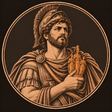
Jupiter promises Venus that Aeneas will wage war in Italy, rule three summers in Latium and be raised to the stars, and that his line will lead to Rome.
-

Virgil's Aeneid has Jupiter shut the winds inside a mountain and set Aeolus over them as their lawful king, making Aeolus's authority a grant from Jupiter rather than a power of his own.
-
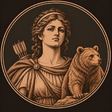
In Ovid Jupiter takes Diana's form to reach Calisto and later carries her and Arcas up to the stars.
-
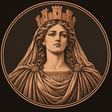
Virgil's Berecyntian mother of the gods addresses Jupiter as her son and asks him to protect the ships cut from her sacred pines on Ida.
-
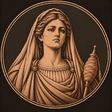
In Dionysius, Brutus hears the report of Lucretia's death and calls on Jupiter and the gods who watch over human life, asking whether Rome is to be delivered from tyranny through him.
-
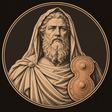
Livy says Numa gave Jupiter a permanent flamen and dedicated an altar to Jupiter Elicius; Ovid has Numa draw the god down and receive the sacred shield.
-
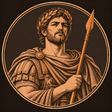
Romulus dedicates the first spolia opima and Rome's first temple to Jupiter Feretrius, and later vows a temple to Jupiter Stator in the Sabine war (Livy 1.12).
-
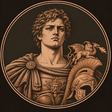
Jupiter tells Hercules that Turnus is summoned to his doom, orders Juno to withdraw her help in Book 9, and in Book 12 sends a Fury that breaks Turnus's nerve.
Read the full source verification →
Mythology
Appears In
Equivalent Figures
Related Terms
Referenced By
Sources
- Livy, Ab Urbe Condita 1.55
- Livy, Ab Urbe Condita 2.8
- Cicero, De Natura Deorum 2.64
- Virgil, Aeneid 1.257-296
- Ovid, Fasti
- Virgil, Aeneid 12.791-842
- Dionysius of Halicarnassus, Roman Antiquities 4.70
- Livy, Ab Urbe Condita 1.20.7
- Georges Dumézil, Archaic Roman Religion (1970)