Mercury
Mercury is the Roman patron of merchants, shopkeepers, and trade, his name drawn from merx, "merchandise." Romans identified him with the messenger god Hermes and inherited his myths, but his own cult grew directly out of a specifically Roman commercial need: a temple dedicated in 495 BCE on the Aventine gave the trading class its own protector, independent of the aristocratic priesthoods.

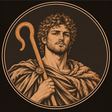
Mercury, Roman god of trade
Generated by AI from this page's own facts, not an ancient image or evidence of anything. How this site uses generated images
Sections on this page
Greek vs Roman: Hermes vs. Mercury → See how Hermes differs.
What does the name "Mercury" mean? →
Looking for a name of your own? Try the mythological name generator.
Core Myth
Mercury's mythology is almost entirely borrowed from the Greek Hermes through interpretatio romana: the messenger's winged sandals, the caduceus, the guidance of souls to the underworld, and the trickster's cunning all cross over unchanged. What Rome added was not new myth but a new office. His temple on the Aventine Hill, dedicated in 495 BCE, stood beside the grain market and was administered by the guild of merchants, the mercatores, rather than by one of Rome's old aristocratic priestly colleges. That arrangement mattered: it gave Rome's trading class a state-recognized cult of its own at a time when major religious offices were controlled by patrician families. Livy records the dedication in the same chapter as the temple of Saturn and the first Saturnalia, which he dates two consulships earlier.
His festival, the Mercuralia, fell on May 15, the same day as his temple's dedication. Merchants drew water from his sacred spring near the Porta Capena, carried it back in special vessels, and sprinkled it over their heads, their merchandise, and their ships, asking the god to absolve the routine dishonesty of trade. Ovid records the prayer directly: a plea for profit and for forgiveness for the lies a merchant tells to make it, in the same breath.
Is Mercury the same god as Hermes?
Romans identified Mercury with Hermes and told the same myths about him, but Mercury's Roman cult grew out of a specific need Hermes never filled in Greece: a state-recognized patron for the merchant class, worshipped from a temple built and run by the traders themselves rather than by inherited aristocratic priesthoods.
Ovid, Fasti 5.669-692
Why is Mercury connected to merchants specifically?
His name comes from merx, "merchandise," and his Aventine temple was dedicated in 495 BCE beside Rome's grain market, administered by the guild of merchants rather than by one of the old patrician priestly colleges. This gave Rome's trading class its own religious institution at a time when most major cults were controlled by aristocratic families.
Livy, Ab Urbe Condita 2.21
What happened during the Mercuralia festival?
On May 15 each year, merchants drew water from Mercury's sacred spring near the Porta Capena, carried it in special vessels, and sprinkled it over their own heads, their goods, and their ships, asking the god to grant them profit and forgive the small dishonesties trade required. Ovid records the prayer as an open admission that a merchant's business and a merchant's lying were hard to separate.
Ovid, Fasti 5.669-692
Did Mercury's Roman role stay only about commerce?
No - his older Greek function as messenger and guide of souls to the underworld remained fully part of his Roman identity, inherited directly from Hermes. The commercial patronage was an addition specific to Rome's own social needs, not a replacement for the god's inherited role.
Virgil, Aeneid 4.238-278
How did Mercury's cult spread through the Roman provinces?
As Roman trade networks grew, Mercury's temples and roadside shrines spread with them, especially into Gaul, where his cult became one of the most widely attested of any Roman god, at times blending with local Celtic deities associated with travel and exchange.
Ovid, Fasti 5.663-692
Later Traditions
As Rome's trade routes expanded, Mercury's cult expanded with them; his temples and roadside shrines were common across the provinces, especially in Gaul, where he was sometimes merged with local Celtic gods of commerce and travel. The planet Mercury, the element mercury (named for its quicksilver movement), and the word "mercantile" all preserve his name. For the god's own birth and youth, including the cattle-theft trick played on Apollo, see the Hermes entry: that material belongs to the Greek tradition Mercury absorbed rather than to anything distinctly Roman.

Bronze statuette of Mercury - Roman, 1st–2nd century CE, Bronze
Metropolitan Museum of Art, New York, NY, 96.9.282. CC0
Lineage
See the full family tree1 recorded relation, each with the ancient line behind it.
Parents
-

Mother was Maia, one of the Pleiades; no separate Roman entity exists yet for her, matching the Greek page's own treatment of Maia.
Also Connected
1 recorded connection, each with the ancient line behind it.
Connected
-
In Ovid's Fasti, Mercury is the god who explains that the Lemuria was first the Remuria, a day Romulus founded after the ghost of Remus asked for honour.
Read the full source verification →
Mythology
Equivalent Figures
Related Terms
Referenced By
Sources
- Ovid, Fasti 5.669-692
- Livy, Ab Urbe Condita 2.21
- Virgil, Aeneid 4.238-278