Remus
Remus is the twin brother of Romulus in the Roman founding legend. Livy makes both sons of the Vestal Rhea Silvia, who named Mars as their father. Remus took the auspices on the Aventine and saw six vultures first, but Romulus claimed the city with twelve. He died at the founding, killed by Romulus or by Celer, depending on the source.
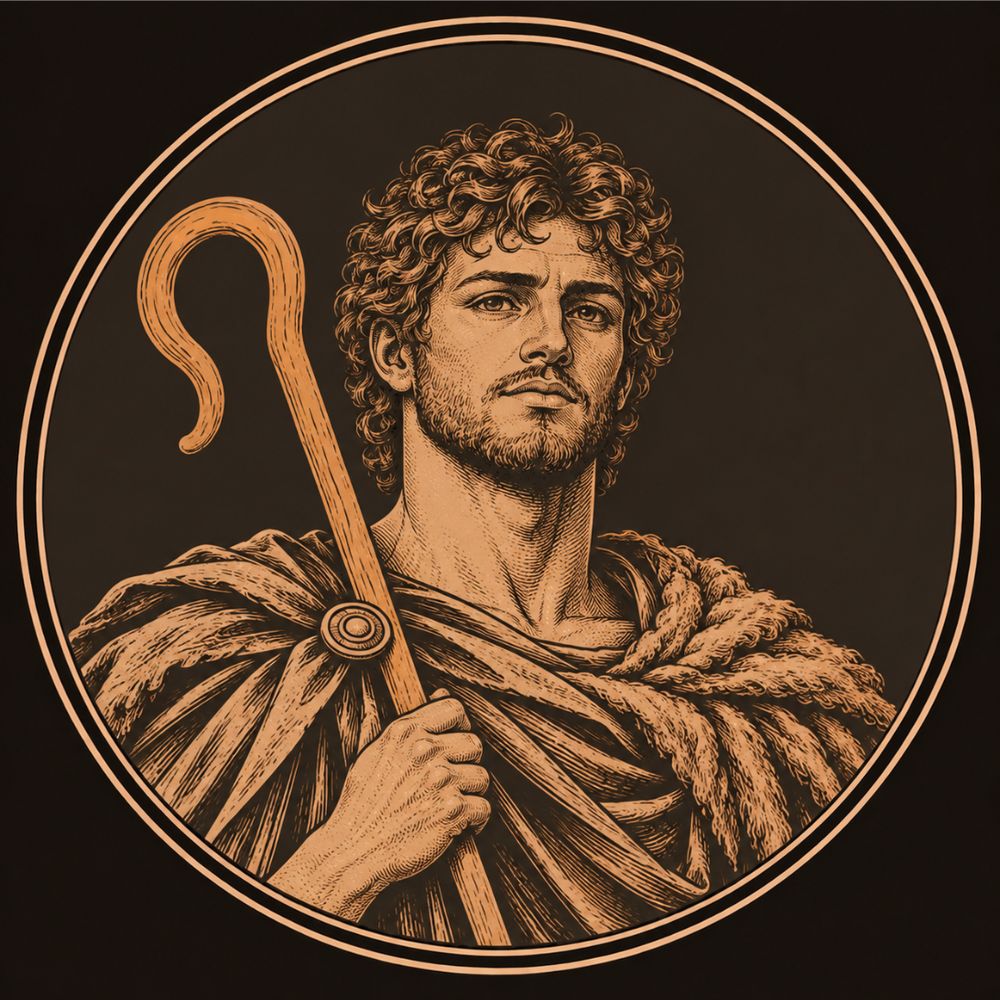
Remus, bronze medallion illustration
Generated by AI from this page's own facts, not an ancient image or evidence of anything. How this site uses generated images
Sections on this page
Core Myth
Remus shares his birth story with his twin Romulus. Livy says the Vestal Rhea Silvia bore twins and named Mars as their father, perhaps so that a god would carry the blame. Exposed beside the flooded Tiber, the boys were suckled by a she-wolf and raised by the herdsman Faustulus and his wife Larentia. Plutarch says both names came from ruma, the Latin word for teat, and gives the second twin as Romus or Remus.
Remus is the twin who gets caught. In Livy, brigands ambushed the brothers during the Lupercalia. Romulus fought them off, but Remus was dragged before Amulius and accused of raiding Numitor's lands. He was handed to Numitor for punishment. Plutarch has Numitor's own herdsmen seize Remus while Romulus was busy with a sacrifice. Dionysius of Halicarnassus records both versions: an ambush after a quarrel over pasture, and an attack on the runners at the Lupercalia.
In Plutarch, Remus speaks for himself before Numitor. He says Numitor seems more like a king than Amulius, because he hears a case before he punishes. Then he tells what he knows: that he and his twin had believed themselves the children of Faustulus and Larentia. Dionysius says Remus went to his fate in silence, without pleading, and that Numitor asked him to avenge the wrongs of his house. In Livy and Plutarch, Remus raised a band inside Alba while Romulus attacked, and Amulius was killed.
Ovid's Fasti tells of an earlier contest that Remus won. During a sacrifice to Faunus, a herdsman shouted that robbers were driving off the cattle. The twins ran out by different ways, and Remus and the Fabii recovered the herd first. Remus pulled the entrails from the spits and said only the victor would eat them. Romulus came back to bare bones. He laughed, but was pained that Remus and the Fabii had won where his own Quintilii had not. Ovid makes this the reason the runners at the Lupercalia go without clothes.
With Numitor restored at Alba, the twins set out to found a city where they had been exposed. Livy says that as twins neither could claim precedence by age, so they asked the gods through augury who would name and rule it. Romulus watched from the Palatine and Remus from the Aventine. Plutarch says Remus had already laid out a strong precinct there, called the Remonium. Dionysius says Remus favoured a site later named Remoria after him, and watched either from the Aventine or from Remoria itself.
Livy says six vultures appeared to Remus first, and then twelve to Romulus. Each twin was hailed king by his own followers, one side claiming priority and the other the number of birds. Plutarch reports that some said Romulus lied about his twelve. Dionysius goes further: Romulus sent for his brother before seeing any birds at all. Six vultures then appeared to Remus, flying from the right. When Remus reached the Palatine and asked what Romulus had seen, twelve vultures flew over. Remus complained that he had been deceived and refused to give up his claim.
The quarrel ended with Remus dead, told in several ways below. His burial differs too. Plutarch says Romulus buried Remus, together with his foster-fathers, in the Remonia. Dionysius says he was buried at Remoria, the site he had wanted for the city. He adds that Romulus, overcome by grief and remorse, lost all wish to live until Laurentia, his foster-mother, comforted him.
What was Remus known for?
Remus is known as the twin of Romulus who lost the founding of Rome to him. Livy makes them sons of the Vestal Rhea Silvia, who named Mars as their father. Suckled by a she-wolf and raised by the herdsman Faustulus, the twins restored their grandfather Numitor to the throne of Alba. Remus then disputed the site and rule of the new city with his brother. He lost the contest of the birds and died at the founding.
Livy, Ab Urbe Condita 1.6
Is Remus a Greek god?
No. Remus belongs to Roman legend, not Greek, and he is a mortal hero rather than a god. Livy makes him a son of the Vestal Rhea Silvia, who named Mars as the father, and he dies at the founding of Rome. His twin fared differently: Livy says Romulus vanished in a storm and was hailed as a god. Ovid's Fasti honours Remus only as a ghost, at the Remuria.
Livy, Ab Urbe Condita 1.4
What happened to Remus?
He died at the founding of Rome, but the sources disagree on how. Livy first says Remus fell in a brawl between the twins' followers after the augury. His more common version has Romulus kill him for jumping the new walls. Plutarch names either Romulus or his companion Celer as the killer. Ovid's Fasti blames Celer alone, acting on Romulus's order to kill anyone who crossed the wall. Dionysius of Halicarnassus prefers death in the battle and says Remus was buried at Remoria.
Livy, Ab Urbe Condita 1.7
Why was Rome named after Romulus and not Remus?
Because Romulus won, or claimed to win, the contest of the birds. Livy says that as twins neither could claim seniority, so they asked the gods through augury who would name and rule the city. Remus saw six vultures first and Romulus saw twelve afterwards. After Remus died, Livy says, Romulus ruled alone and the city took his name. Plutarch and Dionysius of Halicarnassus both report that Romulus cheated by claiming birds he had not yet seen.
Livy, Ab Urbe Condita 1.6
What was the Lemuria?
The Lemuria was a Roman festival of the dead held on three nights in May, and Ovid's Fasti ties its name to Remus. At midnight a householder threw black beans behind him nine times, to ransom himself and his family from the ghosts. Ovid says Romulus founded the day as the Remuria after Remus's ghost asked for honour. Over time the harsh first letter softened into Lemuria. Temples were shut and weddings avoided during these days.
Ovid, Fasti 5.419-492
Later Traditions
Who killed Remus is the central disagreement. Livy gives two versions. In one, the rival parties came to blows after the augury and Remus fell in the tumult. In the other, which Livy calls more common, Remus mockingly jumped the newly raised walls and the enraged Romulus killed him. Plutarch says Remus, angry at the deceit, mocked and obstructed the trench being dug for the wall. When he leapt across it, he was struck by Romulus in some accounts and by his companion Celer in others. Dionysius calls death in the battle the most probable account. His alternative has Remus concede the rule, leap the finished wall, and die from a blow of Celer's mattock.
Ovid's Fasti tells the leap without Romulus's hand in it. Romulus put Celer in charge of the works and told him to kill anyone who crossed the walls or the ploughed trench. Remus, not knowing the order, mocked the low walls and asked whether the people would be safe behind them. He leapt them at once, and Celer struck him down with a shovel. Romulus swallowed his tears in public. At the funeral he kissed the bier and said farewell to a brother taken from him against his will.
Ovid's Fasti also makes Remus the origin of a festival of the dead. After the funeral, his bloodstained ghost stood by the bed of Faustulus and Acca. It said that if the birds had granted him the kingdom, he could have been the greatest among his people. It asked where its father Mars was, and said the she-wolf had been kinder than a citizen's reckless hand. It cursed Celer and cleared its brother, who had not wanted the death. Then it asked for a day in its honour.
Romulus named that day the Remuria, Ovid says, and the harsh first letter later softened, giving the name Lemuria. The silent spirits of the dead came to be called lemures. Ovid puts this explanation in the mouth of Mercury, who had often seen the palace of Stygian Jove. It is Ovid's etymology, told as a poet's aetiology, and no other source used here repeats it.
Not every ancient writer made Remus a twin raised by herdsmen. Dionysius reports Roman accounts in which Romulus and Remus were sons of Aeneas, or of a daughter of Aeneas. In one of them, the brothers received a share of the Latin lands, and Remus founded several cities. The last of these was a Rome, named after himself, which later stood empty until Romulus and Remus resettled it.
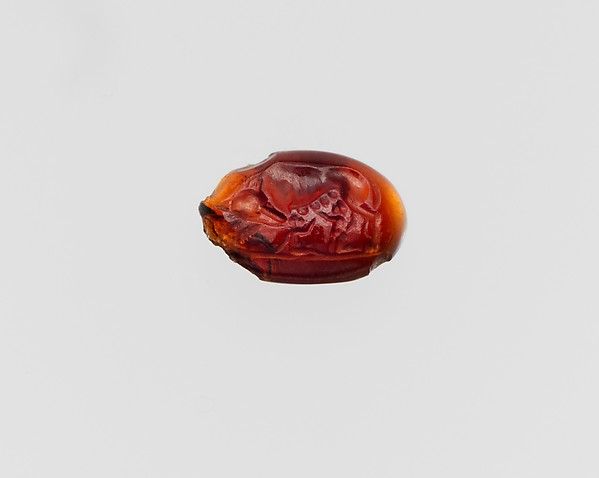
Garnet intaglio: Romulus, Remus, and the She-Wolf - Roman, 2nd century BCE–3rd century CE, Garnet
Metropolitan Museum of Art, New York, NY, 41.160.693. CC0
Lineage
See the full family tree2 recorded relations, each with the ancient line behind it.
Parents
-

Livy reports the paternity of the twins as Rhea Silvia's own claim, made either from belief or to lessen her fault. In Ovid's Fasti (5.465) the ghost of Remus still calls the war god his father.
Siblings
-
Twin sons of Rhea Silvia who restored Numitor at Alba, then quarrelled over the augury for the new city. Livy gives two accounts of Remus's death, one of them at Romulus's hand.
Also Connected
2 recorded connections, each with the ancient line behind it.
Connected
-
A minority tradition reported by Dionysius makes Romulus and Remus sons or grandsons of Aeneas, with Remus founding a Rome named after himself. The standard account makes them Alban descendants of Aeneas's line through Numitor.
-

In Ovid's Fasti, Mercury is the god who explains that the Lemuria was first the Remuria, a day Romulus founded after the ghost of Remus asked for honour.
Where Accounts Differ
- who killed Remus
- whether Romulus cheated in the augury
- where Remus took the auspices
- whether Remus leapt a wall or a trench
- whether the Lemuria was named after Remus
- whether Remus belonged to Aeneas's family
- Who killed Remus differs by source. Livy (1.7) gives an unnamed death in the brawl after the augury, then the more common report that Romulus killed him for leaping the walls. Plutarch (Romulus 10) names Romulus or his companion Celer. Ovid (Fasti 4.837-852) names Celer alone, acting on Romulus's standing order. Dionysius (1.87) prefers death in the battle and gives Celer's mattock as the alternative.
- The augury is told as fair or as rigged. Livy (1.7) leaves it a dispute between priority and number, and Ovid (Fasti 4.817-818) says the pact held and Romulus won the city. Plutarch (Romulus 9) records that some said Romulus lied about his twelve vultures, and Dionysius (1.86) says Romulus summoned Remus before seeing any birds at all.
- Remus's station varies. Livy (1.6) and Ovid (Fasti 4.815-816) put him on the Aventine. Plutarch (Romulus 9) names his precinct there the Remonium. Dionysius (1.85-86) says he favoured a site called Remoria and watched from the Aventine or, in other accounts, from Remoria.
- What Remus leapt differs. Livy (1.7) says the newly raised walls, Plutarch (Romulus 10) the trench dug for the wall, Ovid (Fasti 4.839-843) the low walls after an order covering walls and trench, and Dionysius (1.87) the finished wall after Remus had conceded the rule.
- The link between Remus and the Lemuria rests on Ovid (Fasti 5.445-484), who derives Lemuria from a Remuria founded by Romulus. It is given here as Ovid's aetiology, not as an established derivation.
- Dionysius (1.73) reports Roman accounts that made Romulus and Remus sons or grandsons of Aeneas, in which Remus founded a Rome named after himself. The Loeb translator renders the Greek name as Remus in that passage.
- Livy and Plutarch are cited from the Perseus translations and checked by the site's citation validator. Ovid's Fasti and Dionysius's Roman Antiquities are not in the live citation registry. The Fasti line numbers were checked by hand against the Latin text on Perseus, and Dionysius's chapters against Earnest Cary's Loeb translation on LacusCurtius.
Read the full source verification →
Mythology
Appears In
Related Terms
Referenced By
Sources
- Livy, Ab Urbe Condita 1.4
- Livy, Ab Urbe Condita 1.5
- Livy, Ab Urbe Condita 1.6
- Livy, Ab Urbe Condita 1.7
- Plutarch, Life of Romulus 6
- Plutarch, Life of Romulus 7
- Plutarch, Life of Romulus 8
- Plutarch, Life of Romulus 9
- Plutarch, Life of Romulus 10
- Plutarch, Life of Romulus 11
- Dionysius of Halicarnassus, Roman Antiquities 1.73
- Dionysius of Halicarnassus, Roman Antiquities 1.79
- Dionysius of Halicarnassus, Roman Antiquities 1.80
- Dionysius of Halicarnassus, Roman Antiquities 1.81
- Dionysius of Halicarnassus, Roman Antiquities 1.82
- Dionysius of Halicarnassus, Roman Antiquities 1.85
- Dionysius of Halicarnassus, Roman Antiquities 1.86
- Dionysius of Halicarnassus, Roman Antiquities 1.87
- Ovid, Fasti 2.359-380
- Ovid, Fasti 4.809-856
- Ovid, Fasti 5.419-492