Heracles vs. Hercules
What is the Roman name of Heracles? The Roman name of Heracles is Hercules.
Hercules is the Roman form of Heracles, and the Salian hymn in Virgil lists the same labors the Greeks tell. What is Roman is an episode set in Italy: after taking Geryon's cattle, Hercules kills the thief Cacus on the future site of Rome and founds the Ara Maxima, an altar Romulus adopted as part of the city's own worship (Livy 1.7.3-15; Aeneid 8.184-305).
Sections on this page

How They Compare
Hercules is not a different hero from Heracles. He is the same hero with an added Roman chapter, and that chapter is why Rome treated him as a god of its own worship rather than only a figure of myth.
Side by Side
| Aspect | Heracles | Hercules |
|---|---|---|
| Where the story is set | The labors are performed for Eurystheus of Mycenae, and the Geryon labor ends when the cattle are delivered to him. | The Geryon story continues into Italy, where Hercules crosses the Tiber and meets Cacus on the site of Rome. |
| Cult in Rome | Known through the labors and their Greek settings: Mycenae, Delphi and, at the end, Olympus. | Evander founds the Ara Maxima, the Potitii and Pinarii conduct the rite, and Livy says Romulus adopted it. |
| The Cacus story | Apollodorus ends the tenth labor with the cattle delivered to Eurystheus and sacrificed to Hera (Library 2.5.10). | Livy makes Cacus a shepherd killed with a club. Virgil makes him a fire-breathing son of Vulcan. |
| End of the hero | Hesiod records that Heracles marries Hebe among the gods, and the Odyssey shows only his phantom in Hades. | Ovid has Jupiter tell the gods that only Hercules's mortal part will burn on Oeta. |
Shared between both
- son of the king of the gods and a mortal woman, and hated by Juno or Hera
- performs the labors, including the capture of Geryon's cattle
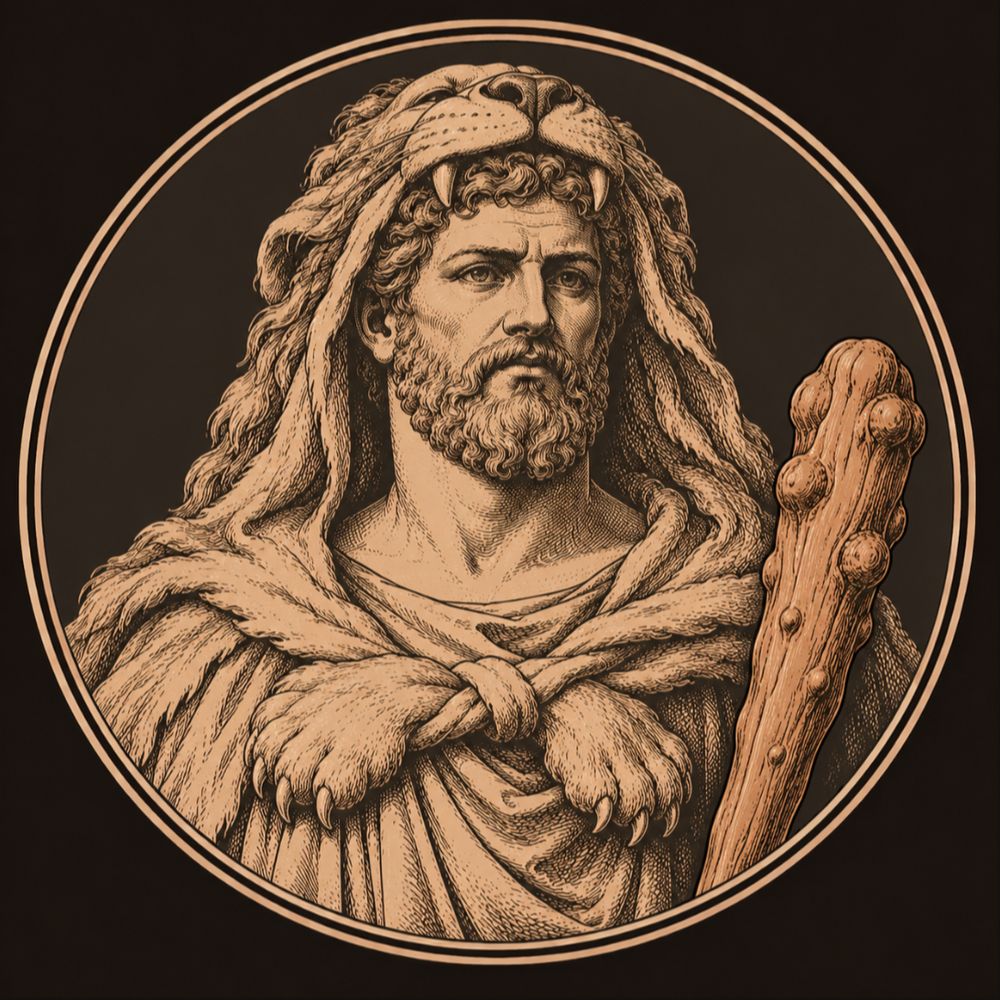
- carries a club and wears a lion skin
- raised to the gods after a fiery death
Was Hercules Greek or Roman?
The hero is Greek, and Hercules is his Roman name. The labors come from the Greek tradition, and Virgil's Salii sing them in a hymn (Aeneid 8.285-302). What is Roman is the episode in Italy, where Livy says Hercules killed Cacus and founded the Ara Maxima on the site of Rome (Livy, Ab Urbe Condita 1.7.3-15). Hercules is therefore a Greek hero with a Roman cult.
Livy, Ab Urbe Condita 1.7.3-15
What is the difference between Heracles and Hercules?
The Romans identified them, so the labors, the club and the lion skin are shared. The Roman additions are the Cacus story and the Ara Maxima (Livy, Ab Urbe Condita 1.7.3-15). On the Greek side, the labor of Geryon ends when the cattle are delivered to Eurystheus (Apollodorus, Library 2.5.10).
Apollodorus, Library 2.5.10
Did Hercules go to Italy?
In the Roman tradition, yes. Livy says he drove Geryon's cattle to the Tiber and killed the thief Cacus there (Livy, Ab Urbe Condita 1.7.3-7). Virgil has King Evander tell Aeneas the same story, with Hercules arriving after he killed Geryon (Aeneid 8.184-279). The Heracles page covers the Greek labors, which end at Mycenae.
Virgil, Aeneid 8.184-279
Was Hercules worshipped as a god in Rome?
Yes. Livy says Evander foretold that the Ara Maxima would one day be honored by the most powerful nation in the world, and that Romulus adopted this cult (Ab Urbe Condita 1.7.10; 1.7.15). Virgil's Salian hymn calls Hercules Jove's true son and asks him to bless his altars (Aeneid 8.285-302). Cicero, however, counts him among men made gods for their services (De Natura Deorum 2.62).
Livy, Ab Urbe Condita 1.7.10
How did Heracles and Hercules die?
Both are consumed on a pyre on Mount Oeta and raised to the gods. Ovid has the hero cursing Juno as the poisoned robe burns him, and Jupiter promises that only the mortal part will be consumed (Metamorphoses 9.172-272). Hesiod records that Heracles, after his labors, was given Hebe as his wife on Olympus (Theogony 950-955). Homer's Odysseus meets only his phantom in Hades, while the hero himself feasts among the gods (Odyssey 11.601-604).
Ovid, Metamorphoses 9.172-272
Where Accounts Differ
- what Cacus was
- whether Hercules was a god from the start
- Cacus is described differently. Livy has a shepherd killed with a club (Ab Urbe Condita 1.7.3-7), and Virgil a half-human, fire-breathing son of Vulcan (Aeneid 8.190-199).
- Hercules's status differs by author. Evander foretells his place among the gods (Livy, Ab Urbe Condita 1.7.10), Cicero counts him among deified men (De Natura Deorum 2.62), and Homer's Odysseus sees his phantom in Hades while the hero feasts among the gods (Odyssey 11.601-604).
The Two Figures
Related Terms
Sources
- Livy, Ab Urbe Condita 1.7.3-7
- Livy, Ab Urbe Condita 1.7.10
- Livy, Ab Urbe Condita 1.7.15
- Livy, Ab Urbe Condita 1.7.3-15
- Virgil, Aeneid 8.184-279
- Virgil, Aeneid 8.285-302
- Apollodorus, Library 2.5.10
- Cicero, De Natura Deorum 2.62
- Ovid, Metamorphoses 9.172-272
- Hesiod, Theogony 950-955
- Homer, Odyssey 11.601-604