Arcadia
Arcadia is the region of Greece that Greek myth ties to Pan, Hermes and the people of King Lycaon.
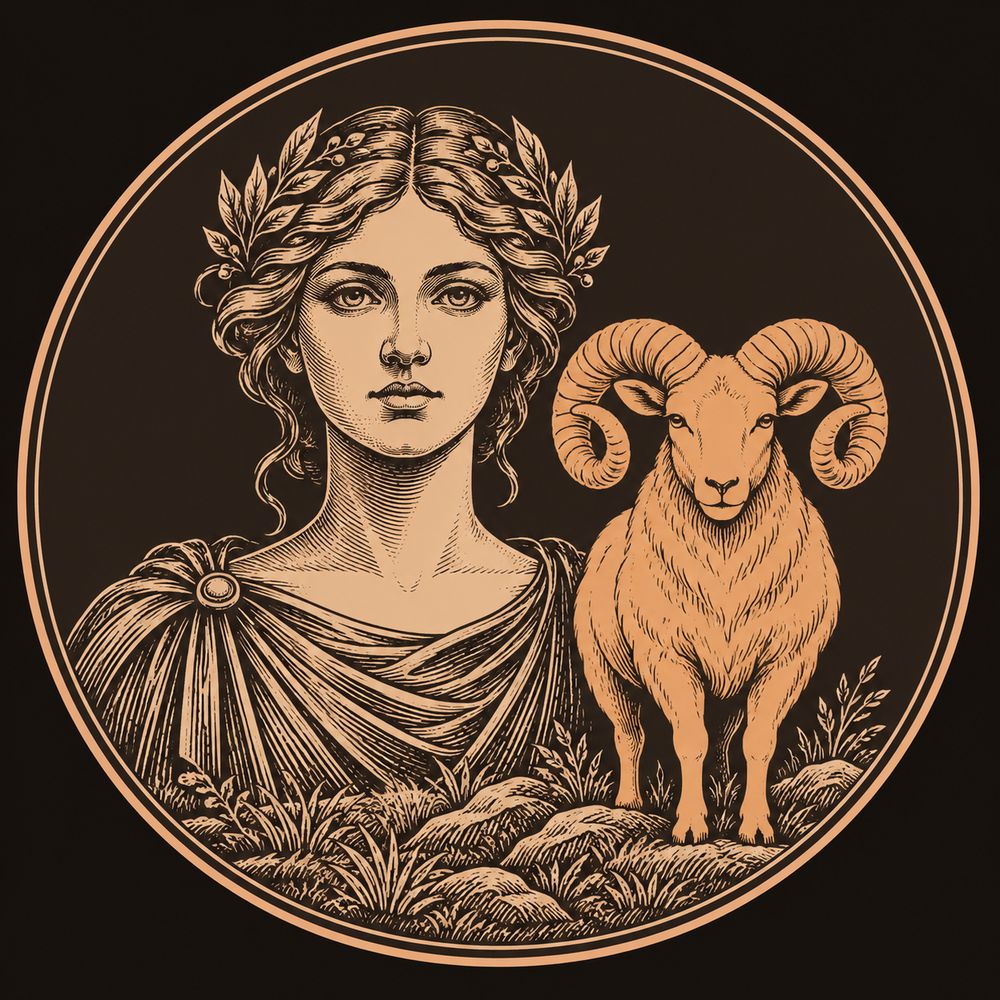
Ram of the Arcadian flocks
Generated by AI from this page's own facts, not an ancient image or evidence of anything. How this site uses generated images
Sections on this page
In Practice
The Hymn to Hermes calls Hermes lord of Cyllene and of Arcadia rich in flocks (Homeric Hymn to Hermes 1-16). The Hymn to Pan brings Hermes to Arcadia, a land of many springs and mother of flocks (Homeric Hymn to Pan 34-47).
Apollodorus says Lycaon reigned over the Arcadians and had fifty sons by many wives (Library 3.8.1). When Nyctimus succeeded to the kingdom, the flood of Deucalion's age came, and some said the impiety of Lycaon's sons caused it. Eumelus and others give Lycaon a daughter, Callisto (Library 3.8.2). Pausanias also makes Callisto Lycaon's daughter, loved by Zeus and turned into a bear by Hera (Pausanias 8.3.6).
Apollodorus places the birth of the seven Pleiades, daughters of Atlas and Pleione, at Cyllene in Arcadia. Maia was one of them (Library 3.10.1). Her son Hermes, one of the Olympian gods, is called son of Zeus and Maia in the Hymn to Hermes (Homeric Hymn to Hermes 1-16).
The Hymn to Pan tells of Hermes in Arcadia. There he tended sheep in the service of a mortal man, because desire to wed the daughter of Dryops had come upon him (Homeric Hymn to Pan 34-47). Another account in the Epitome of Apollodorus says that Penelope, sent away by Odysseus, came to Mantinea in Arcadia and bore Pan to Hermes. A high mound at Mantinea was shown as her grave (Epitome 7.38).
Pausanias reports that historians of Peloponnesian antiquities placed what Clytaemnestra's Furies did to Orestes in Arcadia, before the trial at the Areopagus (Pausanias 8.34.4).
Livy ties Arcadia to Rome. He says the Palatine hill was first called Pallantium, after a city of that name in Arcadia. Evander, an Arcadian, had held that land many ages before. The Lupercalia was already kept there in the days of Romulus (Livy, Ab Urbe Condita 1.5). The festival has its own entry under Lupercalia.
Who is the god of Arcadia?
The sources checked here name no single god of Arcadia. The Hymn to Hermes calls Hermes lord of Cyllene and of Arcadia rich in flocks. The Hymn to Pan describes Pan, the son of Hermes, ranging over mountain peaks and wooded glades. The Epitome of Apollodorus places Pan's birth at Mantinea in Arcadia on one account. Hermes and Pan are the two gods these texts attach to the land.
Homeric Hymn to Hermes 1-16
Is Arcadia a real place in Greece?
The ancient sources treat Arcadia as a real region with named places. The Hymn to Hermes names Cyllene, Apollodorus places the Pleiades' birth there, and the Epitome names Mantinea, where a mound was shown as a grave. Pausanias speaks of the Tegeans and the Arcadians together when he lists their shared exploits. The sources checked here describe a country of towns and mountains, not an invented land.
Apollodorus, Epitome 7.38
Who were the Greek Arcadians?
In Apollodorus the Arcadians are the people ruled by Lycaon, who had fifty sons by many wives. The impiety of those sons is one reason some gave for the flood of Deucalion's age, and Nyctimus ruled after them. Pausanias records that Tegeans and Arcadians shared exploits, among them the Trojan war. Livy calls Evander an Arcadian who held the Palatine hill in Italy long before Rome.
Apollodorus, Library 3.8.1
Was Pan born in Arcadia, and to whom?
The sources checked here disagree on his mother. The Hymn to Pan has Hermes tend sheep in Arcadia for a mortal man, driven by desire to wed the daughter of Dryops. The Epitome of Apollodorus says some report that Penelope, sent away by Odysseus, bore Pan to Hermes at Mantinea in Arcadia. Both accounts name Hermes as the father and Arcadia as the place.
Apollodorus, Epitome 7.38
Where Accounts Differ
- pan-mother-dryops-daughter-vs-penelope
- The mother of Pan is not agreed. The Hymn to Pan has Hermes wed the daughter of Dryops in Arcadia, while Apollodorus's Epitome reports that some say Penelope bore Pan to Hermes at Mantinea. Both are reported here and neither is chosen.
Where This Appears
Referenced By
Sources
- Homeric Hymn to Hermes 1-16
- Homeric Hymn to Pan 34-47
- Apollodorus, Library 3.8.1
- Apollodorus, Library 3.8.2
- Apollodorus, Library 3.10.1
- Apollodorus, Epitome 7.38
- Pausanias, Description of Greece 8.3.6
- Pausanias, Description of Greece 8.34.4
- Pausanias, Description of Greece 8.45.2
- Livy, Ab Urbe Condita 1.5