Anchises
Anchises is a Trojan prince of the house of Dardanus and the mortal father of Aeneas. In the Homeric Hymn to Aphrodite the goddess lies with him on Mount Ida and bears Aeneas, then warns him never to boast of it. In Virgil's Aeneid his son carries him out of burning Troy, and he dies in Sicily before the voyage to Italy ends.
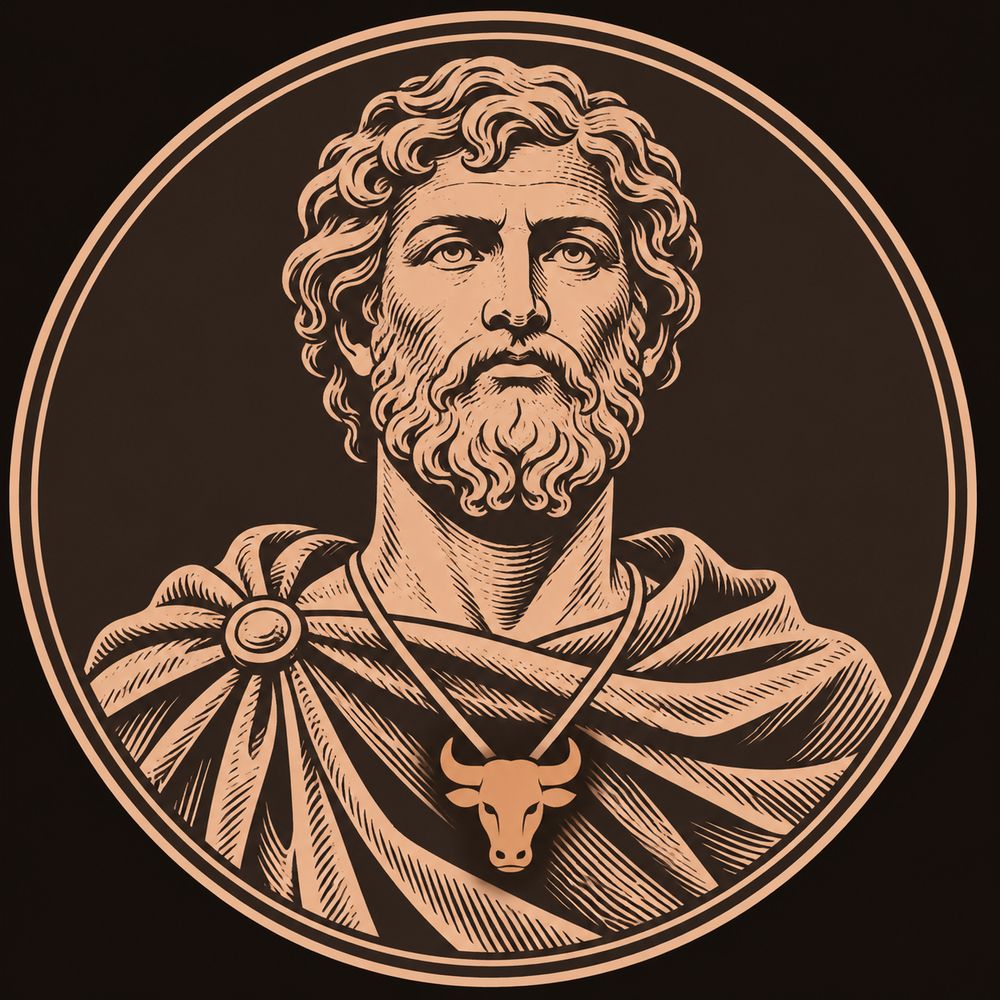
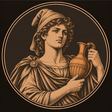
Anchises with an ox-head pendant
Generated by AI from this page's own facts, not an ancient image or evidence of anything. How this site uses generated images
Sections on this page
See Anchises in the Greek family tree.
Core Myth
Anchises belongs to the younger branch of Troy's royal house. In Iliad Book 20 his son Aeneas recites the descent for Achilles: Zeus, Dardanus, Erichthonius, Tros, Assaracus, Capys, Anchises. Tros had three sons, Ilus, Assaracus and Ganymede. Anchises comes down from Assaracus, and Aeneas says plainly that Anchises begat him (Homer, Iliad 20.178-241). Hesiod calls Anchises a hero in the Theogony and says Aphrodite bore Aeneas to him on the peaks of Ida (Hesiod, Theogony 1008-1010).
The Homeric Hymn to Aphrodite tells the meeting from the goddess's side. She goes to Ida, where Anchises tends his herds, and appears before him in the form of a young girl. She tells him she is a mortal, daughter of Otreus of Phrygia, and that Hermes carried her off to be his wife (Homeric Hymn to Aphrodite 75-127). Anchises is seized by love. He says he will lie with her even if Apollo's arrow should strike him afterward. By the will of the gods and of fate, the Hymn says, he lay with her, a mortal man with an immortal goddess (Homeric Hymn to Aphrodite 145-167).
At dawn she wakes him in her true form. Anchises sees her neck and eyes, turns away in fear and hides his face in the cloak. He begs her not to leave him a crippled man, because he who lies with a deathless goddess is no hale man afterwards (Homeric Hymn to Aphrodite 181-190). Aphrodite answers that he is dear to the gods and has nothing to fear. She promises a son who will reign among the Trojans, and children's children after him. The boy will be named Aeneas, from the awful grief she felt at lying in a mortal's bed (Homeric Hymn to Aphrodite 191-199).
The goddess then answers her own shame with family history. She says the race of Anchises is always the most godlike of mortals, and she names Ganymede, whom Zeus carried off to pour wine for the gods. Next she names Tithonus, the lover of Eos, who was granted deathlessness without youth and withered in a locked room (Homeric Hymn to Aphrodite 200-238). Aphrodite says she would not want Anchises immortal in that way. Harsh old age will soon enfold him, she adds, as it comes to every man (Homeric Hymn to Aphrodite 239-246).
Her last words are a command. Mountain nymphs will rear the child, and she will bring him to his father in the fifth year. Anchises must tell the Trojans that a nymph is the boy's mother. If he boasts that he lay with the fair-crowned Cytherea, Zeus will strike him with a smoking thunderbolt (Homeric Hymn to Aphrodite 256-290). The Hymn's account of the child's rearing and of the threat is the fullest the sources checked here give.
The Iliad shows Anchises only through the things he left. Diomedes tells Sthenelus to take the horses of Aeneas, which come from the stock Zeus gave Tros for Ganymede. Anchises had secretly put his mares to that stock without Laomedon's knowledge, and gave two of the six foals to Aeneas (Homer, Iliad 5.263-273). The catalogue of Trojan allies calls Aeneas the valiant son of Anchises, and says the goddess conceived him amid the spurs of Ida (Homer, Iliad 2.819-823). In Book 13 Alcathous is named as Anchises's son-in-law, married to his eldest daughter Hippodameia, whom her father and queenly mother loved (Homer, Iliad 13.449-454).
Why does Aphrodite sleep with Anchises?
The Homeric Hymn says Zeus is the cause. He puts sweet desire into Aphrodite's heart for a mortal man, so that she cannot go on mocking the gods for their affairs with mortal women. She sees Anchises herding cattle on Ida and is seized with longing for him. The Hymn does not give any wish of Anchises himself as the start of the affair.
Who is Anchises in Greek mythology?
Anchises is a Trojan of Troy's royal line and mainly known as the father of Aeneas by Aphrodite. Homer makes him father-in-law to Alcathous, son of Aesyetes, who married Anchises' eldest daughter Hippodameia (Iliad 13.427-433). Anchises is not shown as a fighter or king in any scene of his own, and the family details above come from the passages cited on this page.
What does Anchises tell Aeneas?
In the underworld of Virgil's Aeneid, Anchises explains how souls are made pure. He says a divine spirit fills the world and is dulled by the body. After death the stains are purged by winds, water or fire, and a few souls stay in Elysium. After a thousand years a god calls them to the river Lethe, where they forget and wish to return to bodies.
Was Anchises punished for sleeping with Aphrodite?
The Hymn only threatens punishment. Aphrodite tells Anchises not to boast, or Zeus will strike him with a thunderbolt. Anchises himself fears that he will be a crippled man afterwards. The Hymn does not say that either fear came true. Virgil's Anchises later says Jupiter blasted him with a thunderbolt's wind, but the Aeneid lines checked here give no reason.
How did Anchises die?
Homer and Hesiod tell nothing of his death. Virgil says Anchises died on the voyage from Troy. Aeneas mourns him at Drepanum, in Sicily, calling him the comfort of every care. In the same poem Aeneas meets his father's shade in the underworld, which places the death before that journey.
Later Traditions
Virgil's Aeneid gives Anchises the scenes the earlier poems lack. On the night Troy falls, he refuses to leave. He says he will find death by his own hand, and that he has lingered, useless and hated by the gods, since the father of gods and men blasted him with the wind of a thunderbolt (Virgil, Aeneid 2.634-649). In these lines Virgil does not link the blast to the Hymn's threat. Anchises later yields, and Aeneas carries him from the city on his shoulders (Virgil, Aeneid 2.707-729).
Virgil also ends his life. Aeneas laments at Drepanum in Sicily that he has lost Anchises, the comfort in every care and every chance (Virgil, Aeneid 3.707-711). Anchises then appears in the underworld. He is counting his future descendants in a green valley when he sees his son. He greets him with the words that he has come at last, and Aeneas tries three times to embrace his shade (Virgil, Aeneid 6.679-702). The Roman tradition thus makes the Trojan herdsman the father of a line that leads to Rome, while Homer promises only rule among the Trojans. The Greek heroes cluster places him with the other figures of Troy's royal house.
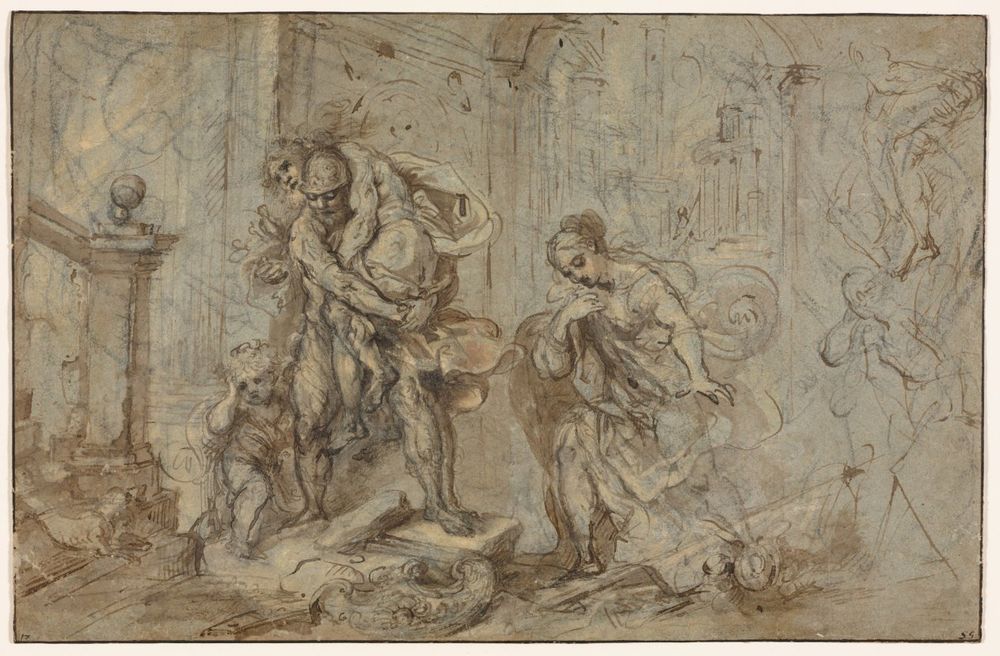
Aeneas Saving Anchises at the Fall of Troy - Italy, 1587–88, Pen and brown ink, brush and brown wash and yellow gouache heightened with traces of white, over black chalk, with stylus (banister); framing lines in pen and brown ink
The Cleveland Museum of Art, Cleveland, OH, 1960.26. CC0
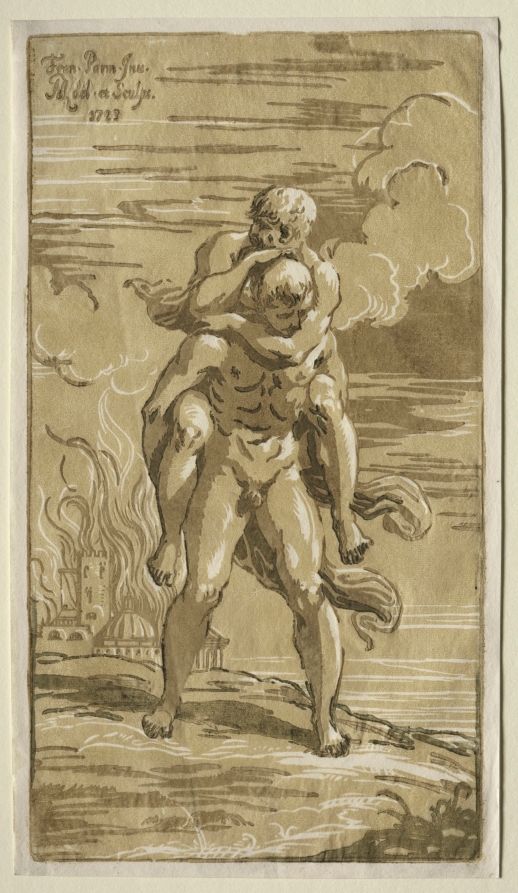
Eneas Carrying Anchises, his Father, from the Burning of Troy - Italy, 1723, chiaroscuro woodcut
The Cleveland Museum of Art, Cleveland, OH, 1944.21. CC0
Lineage
See the full family tree1 recorded relation, each with the ancient line behind it.
Children
-
Hesiod says Aphrodite was joined in love to the hero Anchises and bore Aeneas on the peaks of Ida.
Also Connected
2 recorded connections, each with the ancient line behind it.
Connected
-

In the Homeric Hymn Aphrodite lies with the mortal Anchises on Mount Ida and promises him a son who will reign among the Trojans.
-
Anchises put his mares to the horses Zeus gave Tros in return for his son Ganymede, and gave two of the foals to Aeneas.
Read the full source verification →
Mythology
Appears In
Related Terms
Referenced By
Sources
- Homeric Hymn to Aphrodite 45-57
- Homeric Hymn to Aphrodite 75-127
- Homeric Hymn to Aphrodite 145-167
- Homeric Hymn to Aphrodite 181-190
- Homeric Hymn to Aphrodite 191-199
- Homeric Hymn to Aphrodite 200-238
- Homeric Hymn to Aphrodite 239-246
- Homeric Hymn to Aphrodite 256-290
- Homer, Iliad 2.819-823
- Homer, Iliad 5.263-273
- Homer, Iliad 13.449-454
- Homer, Iliad 20.178-241
- Hesiod, Theogony 1008-1010
- Virgil, Aeneid 2.634-649
- Virgil, Aeneid 2.707-729
- Virgil, Aeneid 3.707-718
- Virgil, Aeneid 6.679-702
- Virgil, Aeneid 6.724-751