Sphinx
The Sphinx was a monster with a woman's face, a lion's body and tail, and a bird's wings, who settled outside Thebes and killed everyone who failed to answer her riddle. Apollodorus records the riddle itself and reports that the hero Oedipus solved it, at which the Sphinx threw herself from the citadel to her death rather than live with her defeat.

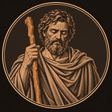
Sphinx, the riddling monster of Thebes
Generated by AI from this page's own facts, not an ancient image or evidence of anything. How this site uses generated images
Sections on this page
See Sphinx in the Greek family tree.
Core Myth
Apollodorus gives the fullest surviving account of the Sphinx: a creature with the face of a woman, the breast, feet, and tail of a lion, and the wings of a bird, sent to plague Thebes. She took up a position on a hill near the city and put the same riddle to every traveler who passed: what has one voice and yet becomes four-footed, two-footed, and three-footed? Whoever failed to answer, she killed on the spot, and the deaths mounted until the city was desperate for a solution.
The riddle's answer, per Apollodorus, is a human being: crawling on all fours as an infant, walking on two feet as an adult, and adding a cane as a third support in old age. Apollodorus credits a stranger named Oedipus with working this out; solving the riddle broke whatever power kept the Sphinx alive on failure, and rather than accept defeat she threw herself from the citadel and died. The vacant Theban throne and the widowed queen Jocasta both passed to Oedipus as his reward - the marriage that sets the rest of his own story in motion, though that story belongs to Oedipus rather than to the Sphinx's own myth. The encounter itself is told in Oedipus and the Sphinx.
What was the Sphinx's riddle?
Apollodorus records it as: what has one voice and yet becomes four-footed, two-footed, and three-footed? She put the same question to every traveler passing near Thebes and killed anyone who could not answer it.
Apollodorus, Library 3.5.8
What is the answer to the Sphinx's riddle?
A human being. Apollodorus explains the logic behind the answer directly: a person crawls on all fours as an infant, walks upright on two feet as an adult, and in old age adds a cane as a third support, matching all three counts in a single life.
Apollodorus, Library 3.5.8
How did the Sphinx die?
By her own hand. Once Oedipus correctly solved her riddle, Apollodorus reports that the Sphinx threw herself from the Theban citadel rather than live with her defeat, ending the killings she had carried out on everyone who failed before him.
Apollodorus, Library 3.5.8
Who were the Sphinx's parents?
Hesiod's Theogony names Echidna as her mother, in union with Orthus - Echidna's own son by Typhon - rather than with Typhon directly. The underlying Greek text is genuinely ambiguous at this point, and some readings instead make the Chimera, not Echidna, the mother meant in the passage.
Hesiod, Theogony 326-329
Is the Sphinx related to other Greek monsters?
Yes, by way of her mother. Hesiod's catalogue places her immediately after Echidna's other children, Cerberus, the Hydra, and the Chimera, making her a half-sister of sorts to all three even though a different father is named for her specifically.
Hesiod, Theogony 319-332
Why did the Sphinx come to Thebes in the first place?
Apollodorus attributes her arrival to the anger of Hera at the Theban royal house, without spelling out the full original offense in detail. Whatever the exact cause, the effect was the same: a monster stationed at the city's edge, killing anyone who could not answer her riddle, until Oedipus solved it.
Apollodorus, Library 3.5.8
Later Traditions
The Sphinx's design - a human head on a lion's body, sometimes winged - closely parallels figures from Egyptian and Near Eastern art centuries older than any Greek telling, and most classicists treat the Greek Sphinx as an import that picked up the riddle and the Theban setting only after arriving in Greek storytelling. Unlike the silent, monumental Egyptian sphinx built as a guardian statue, the Greek Sphinx talks, kills, and eventually loses - a living antagonist inside someone else's hero story rather than an architectural fixture. Diodorus Siculus describes the Syrian goddess Derceto of Ascalon with a woman's head and a fish's body, a Near Eastern hybrid unlike any Greek fish-tailed woman.

Fragmentary limestone sphinx - Greek, Attic, early 6th century BCE, Limestone
Metropolitan Museum of Art, New York, NY, 26.13. CC0
Lineage
See the full family tree4 recorded relations, each with the ancient line behind it.
Parents
-

Hesiod names Orthus, Echidna's own son by Typhon, as the father. The underlying Greek text is genuinely ambiguous about whether Echidna or the Chimera is the mother meant in this passage.
Siblings
-

Hesiod names the Sphinx in the same catalogue passage as these monsters, but manuscripts disagree on the exact parent pairing behind her birth, which is why this sibling link is marked weak rather than strong.
-

Hesiod names the Sphinx in the same catalogue passage as these monsters, but manuscripts disagree on the exact parent pairing behind her birth, which is why this sibling link is marked weak rather than strong.
-

Hesiod names the Sphinx in the same catalogue passage as these monsters, but manuscripts disagree on the exact parent pairing behind her birth, which is why this sibling link is marked weak rather than strong.
Also Connected
2 recorded connections, each with the ancient line behind it.
Connected
-
Oedipus answered the Sphinx's riddle, and she threw herself from the citadel.
-

Typhon is Echidna's mate and father of the Sphinx's half-siblings in Hesiod's catalogue; Hesiod does not name him as the Sphinx's own father.
Where Accounts Differ
- Echidna or Chimera as the Sphinx's mother
- The Sphinx's parentage is uncertain: Hesiod's Greek is ambiguous about whether Echidna or the Chimera is the mother who mated with Orthus to produce the Sphinx and the Nemean lion; this entry follows the Echidna reading used in the standard English translation, but the alternative is a genuine, unresolved textual crux.
- Sophocles never quotes the riddle; its wording comes from later prose sources such as Apollodorus, so the riddle text on this page is not the tragedians' own.
Read the full source verification →
Mythology
Referenced By
Sources
- Apollodorus, Library 3.5.8
- Hesiod, Theogony 326-332
- Timothy Gantz, Early Greek Myth (1993)