Sibyl
A sibyl is an inspired woman who speaks prophecy under the compulsion of a god, usually Apollo.
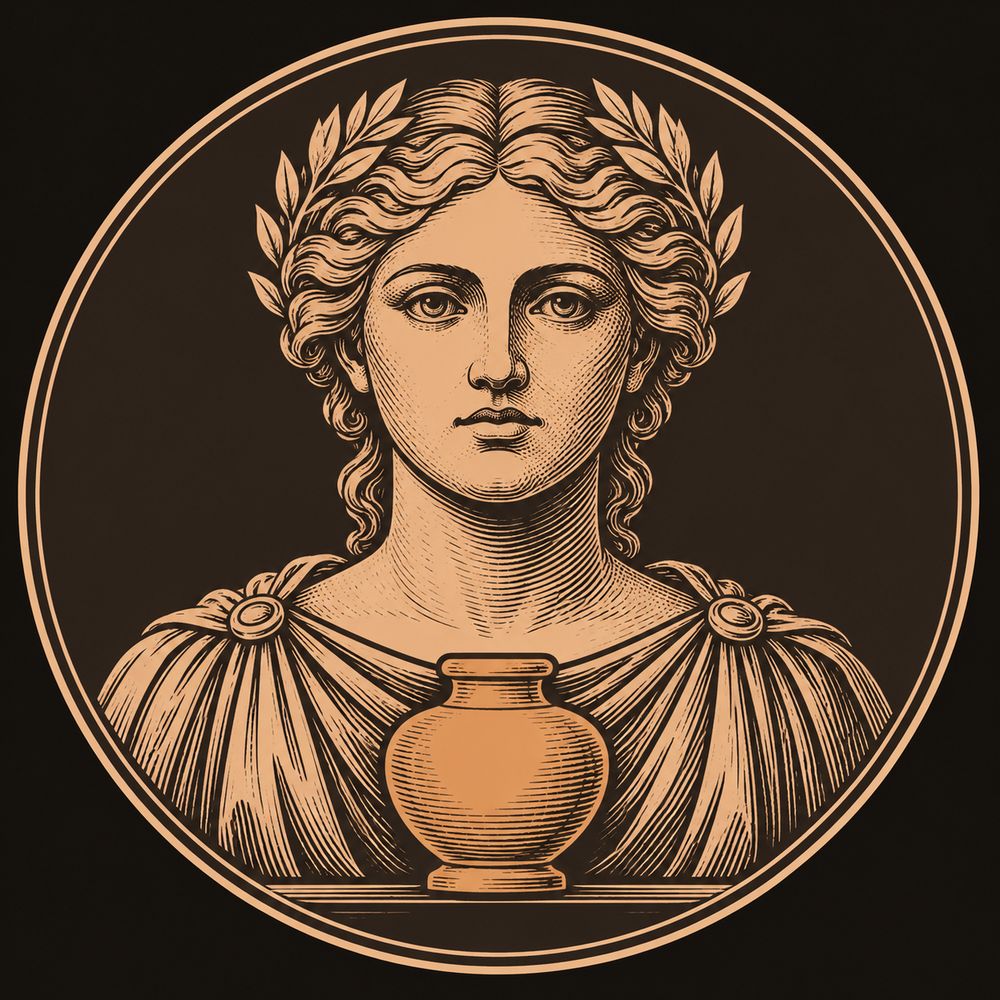
Small stone urn said to hold the bones of Demo
Generated by AI from this page's own facts, not an ancient image or evidence of anything. How this site uses generated images
Sections on this page
In Practice
Greek and Roman writers use Sibyl as a title for several prophetesses before they use it as the name of one. Pausanias says the Libyans first gave the name to the earliest of them (Description of Greece 10.12.1).
Pausanias names Herophile as an early Sibyl and tells it as a local story. The Delphians said she stood on a rock above the ground and chanted oracles there (Description of Greece 10.12.1). Her verses foretold that Helen would ruin Asia and Europe and that the Greeks would take Troy (Description of Greece 10.12.2). In her own verses she called herself half mortal and half divine, with an immortal nymph for a mother (Description of Greece 10.12.3). The title therefore names a prophetess who is not a goddess.
The sources do not keep her in one place. Pausanias says she lived mostly on Samos and also visited Clarus, Delos and Delphi, and that the Alexandrians of the Troad tied her to the temple of Apollo Smintheus (Description of Greece 10.12.5). The Erythraeans claimed her and showed a cave on Mount Corycus as her birthplace (Description of Greece 10.12.7). Pausanias names the next Sibyl as Demo of Cumae, on the authority of Hyperochus of Cumae (Description of Greece 10.12.8). The best-known Roman case is the Cumaean Sibyl, who has her own entry.
Lactantius reports that Varro counted ten Sibyls and derived the word from Aeolic forms meaning god's counsel (Divine Institutes 1.6). The Roman poets show what the title meant in practice. Virgil's Sibyl speaks only when the god seizes her, and the god drives her like a horse under bit and rein (Aeneid 6.77-80). A sibyl is not tied to one sanctuary the way the Pythia is tied to Delphi. The wider setting is in oracles and fate.
What is the meaning of Sibyl?
The ancient sources give two accounts. Pausanias says the Libyans gave the name Sibyl to the first prophetess of that kind, and that later women who chanted oracles inherited it (Description of Greece 10.12.1). Lactantius reports that Varro derived the word from Aeolic forms meaning god's counsel (Divine Institutes 1.6). The sources checked here do not decide between these explanations, so both are given as ancient claims, not as settled etymology.
Is it Sybil or Sibyl?
The English translations of Pausanias, Virgil and Ovid used for this site all print Sibyl, so this page uses Sibyl for the prophetess. Sybil is a different matter: it is a spelling in use as a modern personal name, and the ancient passages checked here do not use it or explain it. The ancient prophetess is the one this entry and the Cumaean Sibyl entry describe.
Is Sybil a goddess?
No source checked here makes a Sibyl a goddess. Pausanias quotes Herophile calling herself half mortal and half divine, the child of an immortal nymph and a mortal father (Description of Greece 10.12.3). Virgil's Sibyl is a priestess of Apollo who needs the god to seize her before she can speak (Aeneid 6.77-80). The prophetic gift belongs to the god, and the woman is its human instrument.
Which cities claimed a Sibyl as their own?
Several did, and the claims overlap. The Delphians pointed to a rock where Herophile had chanted (Description of Greece 10.12.1). The Erythraeans said she was born on Mount Corycus, the daughter of a shepherd named Theodorus and a nymph (10.12.7). The Cumaeans showed Pausanias a small stone urn said to hold the bones of their Sibyl, Demo (10.12.8). Pausanias reports each claim without choosing one.
What did the Sibyls foretell?
The early Greek reports concern Troy. Herophile's verses said Helen would ruin Asia and Europe and that the Greeks would take Troy (Description of Greece 10.12.2). Lactantius, citing Varro, gives the Erythraean Sibyl a warning to the Greeks sailing for Troy that Troy would fall and that Homer would write falsehoods (Divine Institutes 1.6). Virgil's Cumaean Sibyl foretells war in Latium for Aeneas (Aeneid 6.83-97).
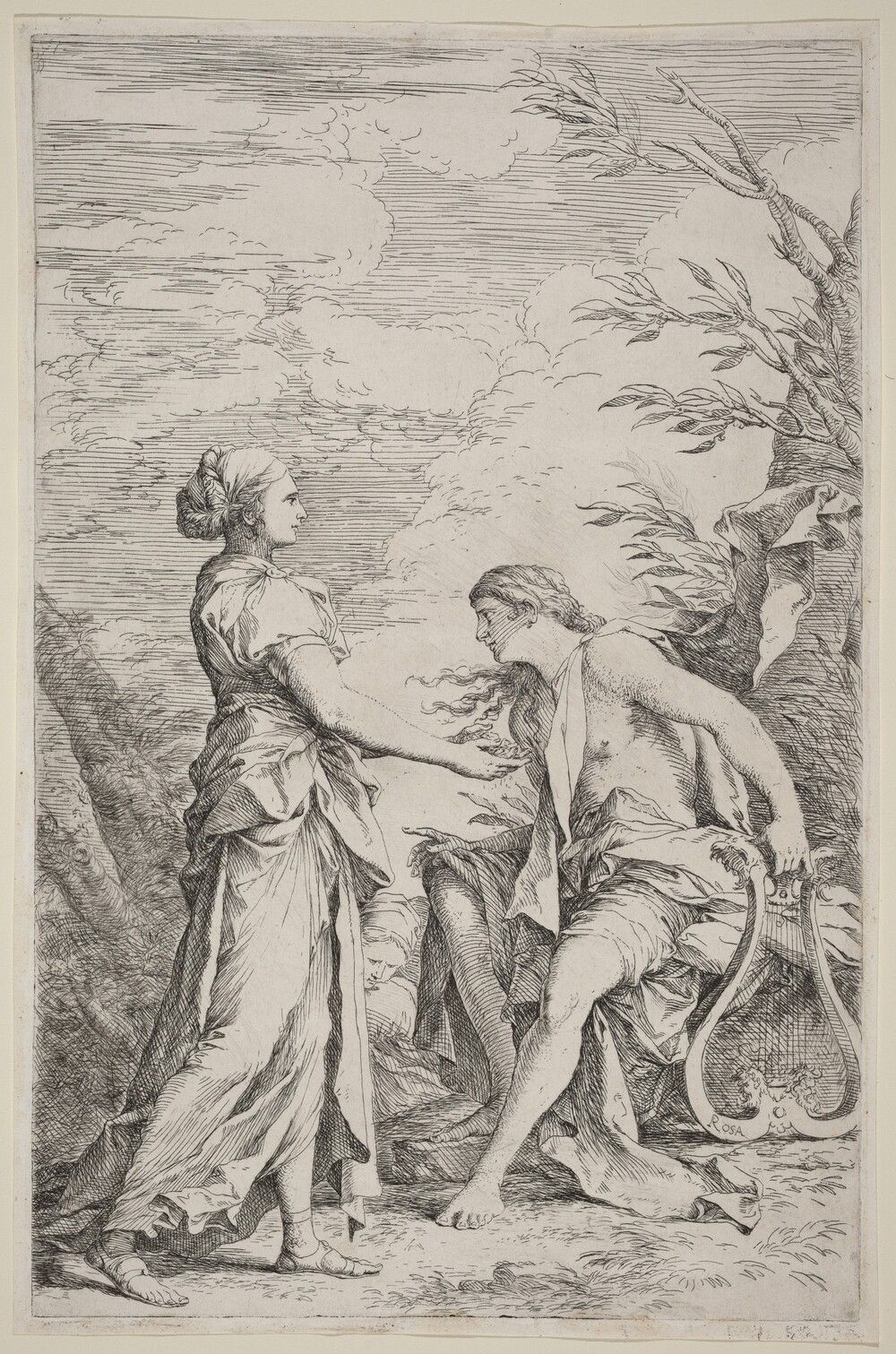
Apollo and the Cumaean Sibyl - Salvator Rosa, c. 1661, etching and drypoint on laid paper
National Gallery of Art, Washington, DC, 1995.10.3. CC0
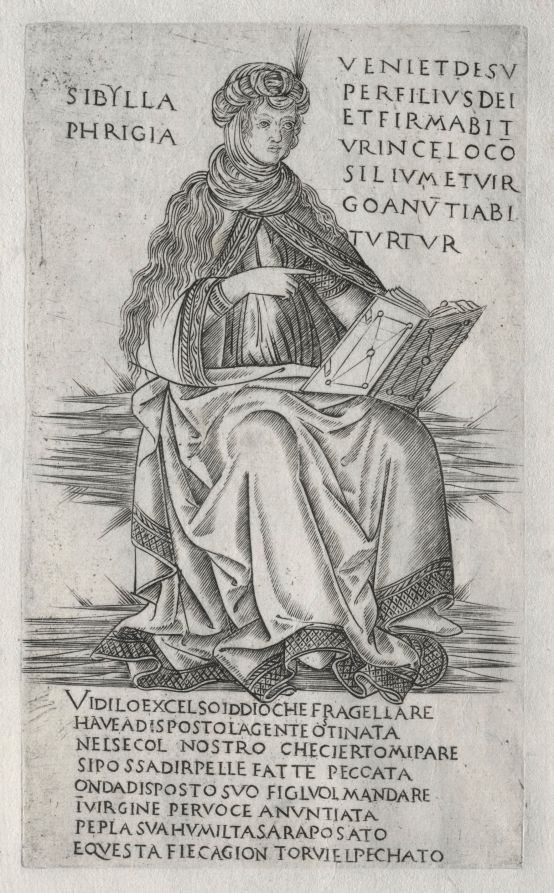
The Sibyls: The Phrygian Sibyl - Italy, Florence, c. 1470–80, engraving
The Cleveland Museum of Art, Cleveland, OH, 1943.388. CC0
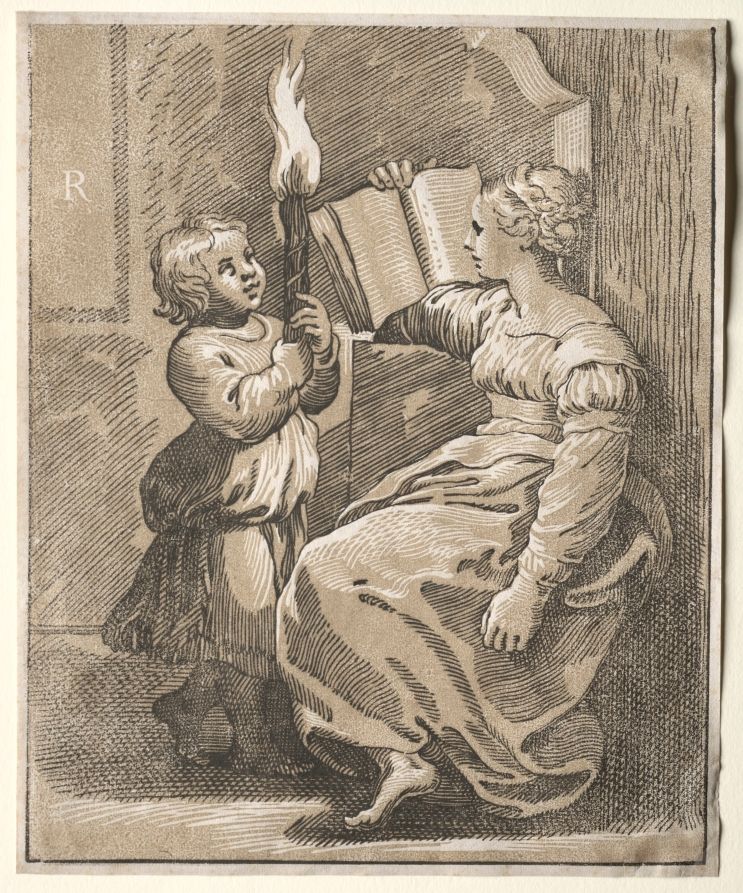
Sibyl Reading with a Child Holding a Torch - Italy, 1518–27, chiaroscuro woodcut
The Cleveland Museum of Art, Cleveland, OH, 1979.93. CC0
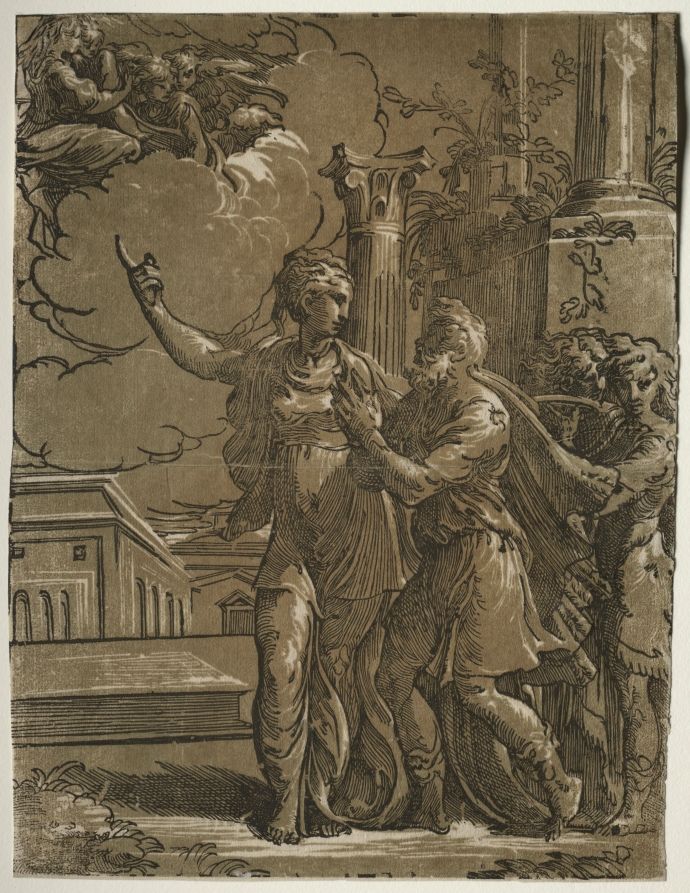
Tiburtine Sibyl and the Emperor Augustus - Italy, c. 1527–30/31, chiaroscuro woodcut (in brown-green and black)
The Cleveland Museum of Art, Cleveland, OH, 1923.115. CC0
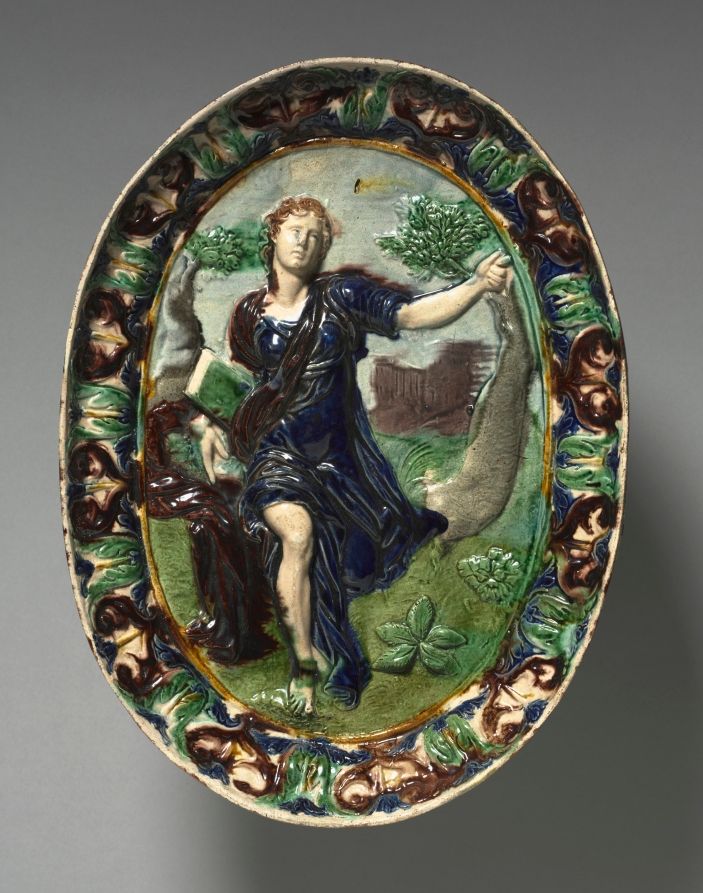
Oval Dish Depicting Cumaean Sibyl - France, late 1500s, earthenware with lead glazes
The Cleveland Museum of Art, Cleveland, OH, 1986.58. CC0
Where Accounts Differ
- herophile-at-delphi-samos-or-erythrae
- one-sibyl-or-ten
- Where Herophile belongs: Pausanias says the Delphians showed the rock where she chanted (10.12.1), the Alexandrians of the Troad tied her to Apollo Smintheus (10.12.5), and the Erythraeans claimed her birth on Mount Corycus (10.12.7). Pausanias reports all three and the sources checked here do not choose one.
- How many Sibyls: Pausanias names a first Sibyl, then Herophile, then Demo of Cumae (10.12.1-8), while Lactantius, citing Varro, counts ten (Divine Institutes 1.6). The two lists are different traditions and are not reconciled here.
- Verification: Pausanias 10.12 was read in the English translation on Theoi and checked by the Perseus citation validator. Aeneid 6.77-80 and 6.83-97 and Lactantius 1.6 are cited as on the Cumaean Sibyl entry. The Sybil spelling, Sibyls in the Bible and Michelangelo's Sistine Sibyls are modern or later material and are not covered.
Where This Appears
Referenced By
Sources
- Pausanias, Description of Greece 10.12.1
- Pausanias, Description of Greece 10.12.2
- Pausanias, Description of Greece 10.12.3
- Pausanias, Description of Greece 10.12.5
- Pausanias, Description of Greece 10.12.7
- Pausanias, Description of Greece 10.12.8
- Virgil, Aeneid 6.77-80
- Virgil, Aeneid 6.83-97
- Lactantius, Divine Institutes 1.6