Hesperia
Hesperia is a name with three uses in the sources checked here. In Ovid it belongs to a nymph, the daughter of Cebrenus, who dies of a snake bite while fleeing Aesacus. In Apollodorus it is one of four Hesperides who guard the golden apples. In Virgil's Aeneid it is the Greek name for Italy, the western land Aeneas seeks.
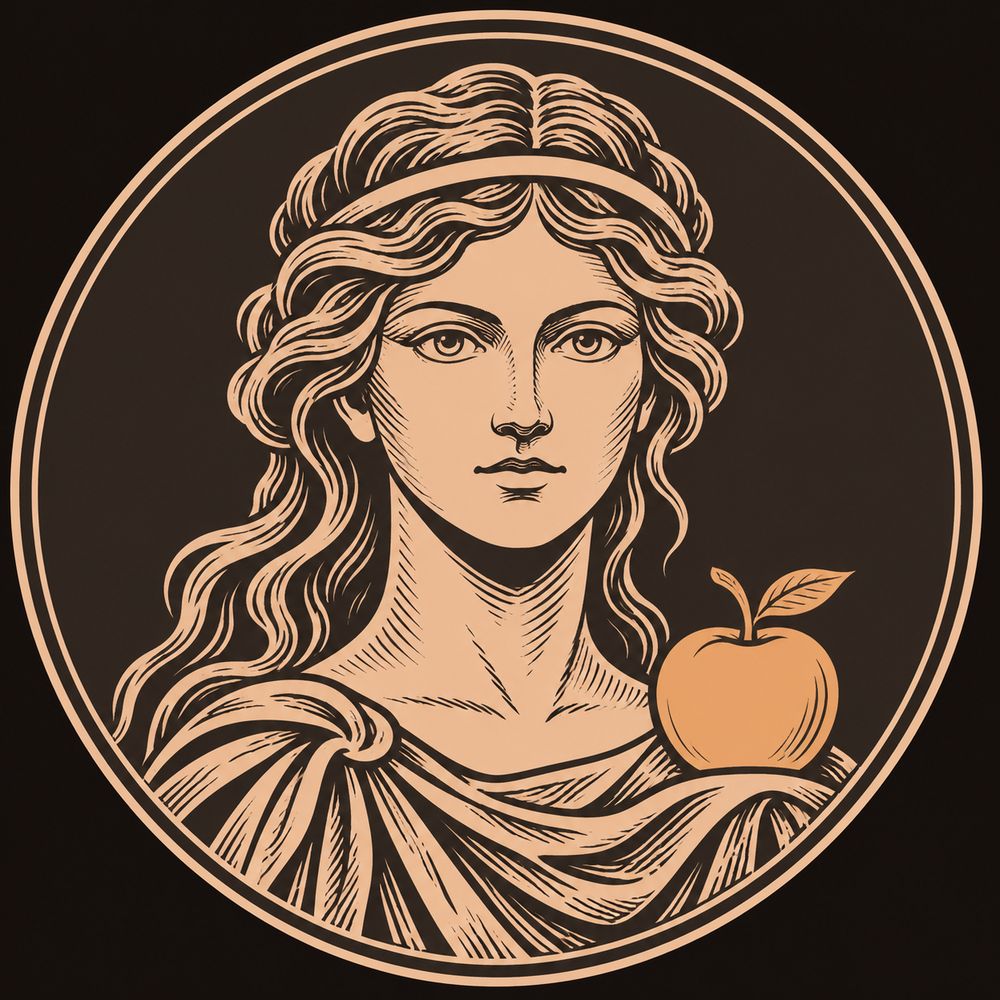
Hesperia holding a golden apple
Generated by AI from this page's own facts, not an ancient image or evidence of anything. How this site uses generated images
Sections on this page
Core Myth
Ovid gives Hesperia her only story. Aesacus, a Trojan prince and brother of Hector, sees her resting on the banks of a stream. She is the daughter of Cebrenus. She flees him, and a snake bites her heel. She dies of the wound. Aesacus is overcome by grief and throws himself from a cliff into the sea (Ovid, Metamorphoses 11.749-795). The sea goddess Tethys takes pity on him and turns him into a diving bird, but he keeps trying to end his life by plunging into the water.
Apollodorus uses the same name for a different figure. When he tells the eleventh labour of Heracles, he says the golden apples were guarded by an immortal hundred-headed dragon, the offspring of Typhon and Echidna. With it, he says, the Hesperides also stood guard, and he names them Aegle, Erythia, Hesperia and Arethusa (Apollodorus, Library 2.5.11). This Hesperia is one member of the group treated on the page for the Hesperides. Apollodorus tells nothing else about her.
The sources do not connect the two nymphs. Ovid's Hesperia has a father, Cebrenus, and a death by a snake, and nothing in the passage checked here places her at the western garden. Apollodorus's Hesperia has no father, no story and no death. The same name, then, is carried by two figures that no checked passage joins.
Who is Hesperia in Greek mythology?
Two figures carry the name in the sources checked here. Apollodorus lists Hesperia as one of four Hesperides who guard the golden apples, and says nothing more of her. Ovid tells of a Hesperia who is the daughter of Cebrenus, pursued by the Trojan prince Aesacus and killed by a snake. No passage checked here says the two are the same nymph.
What does the name Hesperia mean?
The ancient passages checked here never explain the word. Virgil calls Hesperia a land that the Greeks named, and the Hesperides are placed beyond Ocean towards Night. Modern reference works derive the name from the Greek word for evening, so that Hesperia means the western land, the place where the day ends. That derivation is modern, not a claim made by Virgil or Hesiod.
How do the sources give the parentage of the Hesperides?
Hesiod makes them daughters of Night and places them beyond glorious Ocean. Apollodorus names four of them and gives parents only for the dragon that guards the apples, Typhon and Echidna. The passages checked here name no father for the Hesperides, and none makes them children of Atlas, who is placed near them.
Why does Virgil call Italy by two names?
Virgil gives each name a different speaker and a different origin. The household gods say Greeks call the land Hesperia, while the later descendants of the Oenotrians name it Italy after a chieftain. Virgil's Ilioneus also speaks of the Greek name Hesperia before Dido. The poem thus treats Hesperia as a name from outside and Italy as the name of the people who live there.
Later Traditions
In Virgil, Hesperia is a country. Creusa's ghost tells Aeneas that he will come to Hesperia, whose fruitful plains the Tiber waters (Aeneid 2.787-789). The household gods repeat the name in Crete. They say that Greeks call the land Hesperia, and that the descendants of the Oenotrians call it Italy after a chieftain (Aeneid 3.163-171). Ilioneus uses the same Greek name when he speaks to Dido (Aeneid 1.530-534). In all three places it is the land Aeneas is to reach.
Virgil keeps the word in the war books. His invocation of Erato says that Etruria's host and all Hesperia gathered to the fray (Aeneid 7.37-81). Hesperia there stands for the peoples of Italy who fight the Trojans in Latium, under leaders such as Latinus and Turnus.
Three senses of the word are easy to confuse.
- Italy: Hesperia is the western land of Latin epic, the name Virgil says the Greeks gave it (Aeneid 3.163-171). - The Hesperides: the western nymphs and their garden, where Hesiod makes them daughters of Night beyond Ocean (Theogony 211-225). - Hesperus: the evening star, which Homer calls Hesperos (Iliad 22.317-318).
The three share one Greek idea. Hesperos is the Greek word for evening, and the west is where the day ends. The Hesperides are the daughters of evening, and Italy was called Hesperia because it lay to the west of Greece. The passages checked here never state this link. It is a modern derivation, and it joins the myth sense and the place-name sense that the separate sources keep apart.
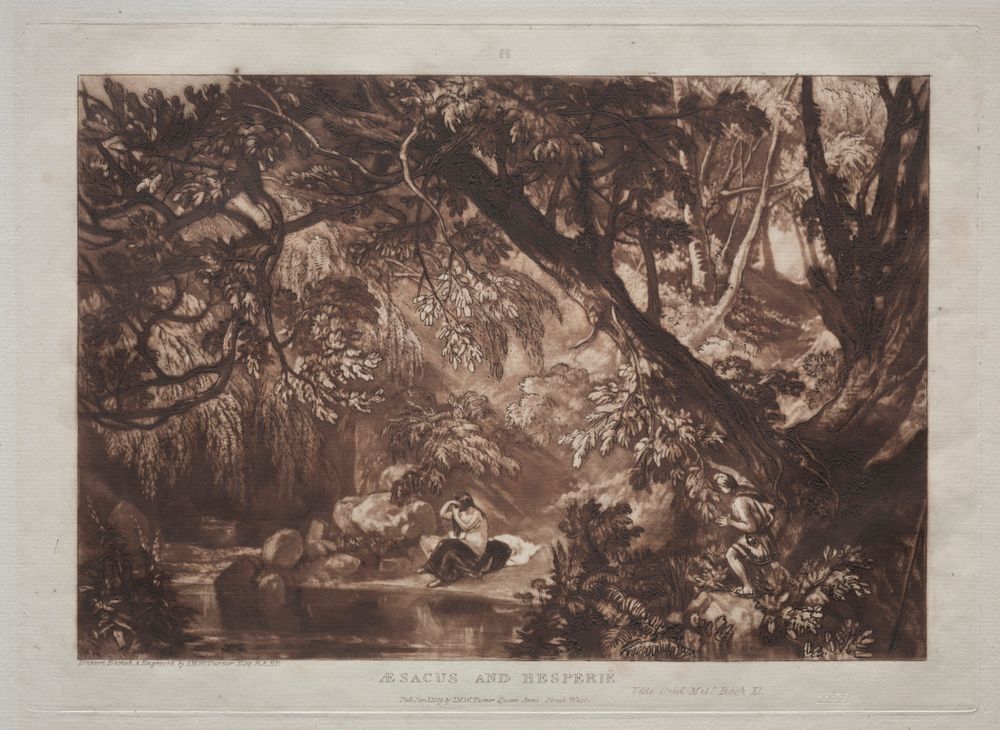
Liber Studiorum: Aesacus and Hesperie - England, 19th century, 1790–1851, etching and mezzotint
The Cleveland Museum of Art, Cleveland, OH, 1919.164. CC0
Also Connected
4 recorded connections, each with the ancient line behind it.
Connected
-
Ovid's Hesperia is pursued by Aesacus, a Trojan prince who is a brother of Hector. Hector himself plays no part in her story.
-
Apollodorus names Hesperia among the four Hesperides who guard the golden apples with the dragon. Ovid's Hesperia, the daughter of Cebrenus, is not called a Hesperid in the passage checked here.
-
Virgil's invocation of Erato, which names all Hesperia gathering for the war, leads into the story of King Latinus. Hesperia is the land and Latinus one of its kings.
-
Virgil's invocation of Erato names all Hesperia gathering for the war, and the same passage introduces the suitor Turnus who leads the Italian side.
Where Accounts Differ
- which figure the name Hesperia names
- who the parents of the Hesperides are
- The name Hesperia belongs to different figures. Ovid (Metamorphoses 11.749-795) has the daughter of Cebrenus, Apollodorus (Library 2.5.11) has one of four Hesperides, and Virgil (Aeneid 3.163-171) has the Greek name for Italy. No passage checked here ties these uses together.
- The sources give no origin for the Hesperides that a single passage settles. Hesiod (Theogony 211-225) makes them daughters of Night. Apollodorus (Library 2.5.11) gives no parents for them. The Hesperides page treats the group.
Read the full source verification →