Pylos
Pylos is the city of Nestor in Greek myth, the well-built citadel of Neleus on the sea in the Odyssey.
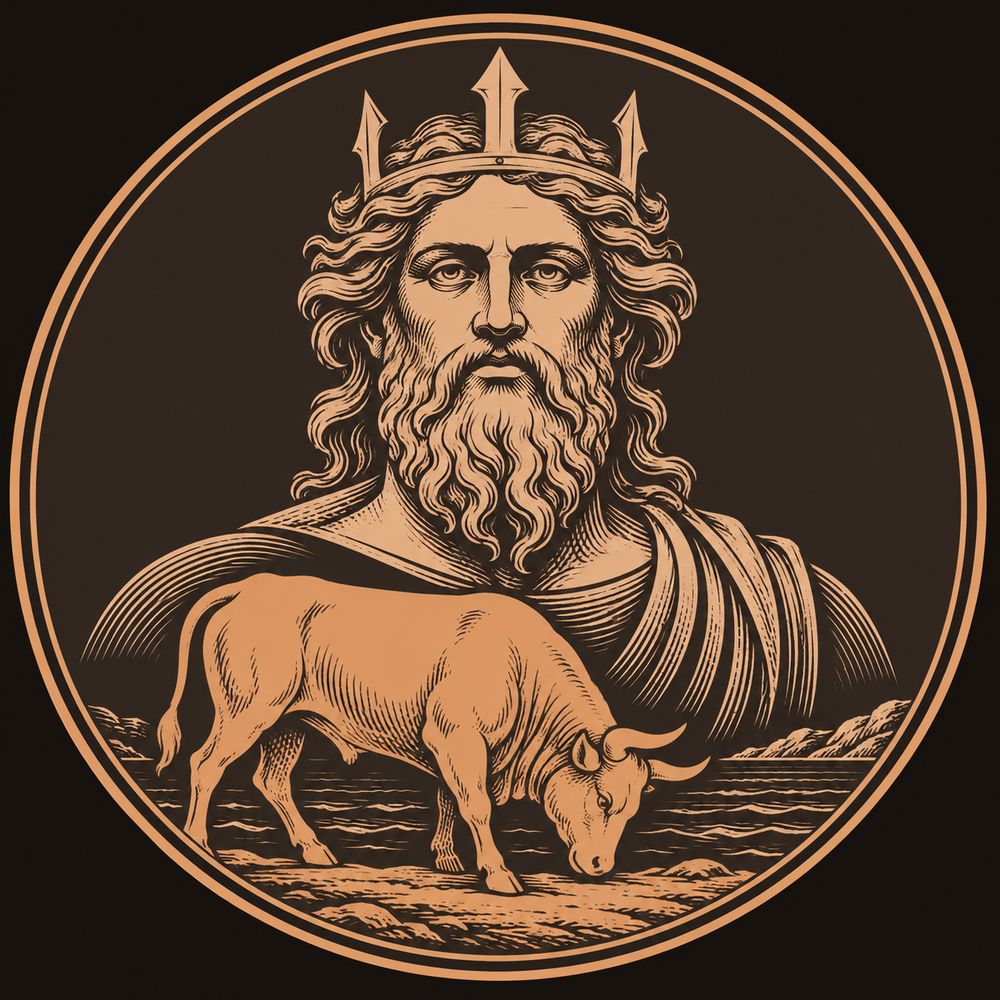
Black bull for Poseidon at the shore
Generated by AI from this page's own facts, not an ancient image or evidence of anything. How this site uses generated images
Sections on this page
In Practice
Telemachus sails there first to ask Nestor for news of his father (Odyssey 1.280-297). The Iliad calls Nestor king of sandy Pylos (Iliad 2.100-108).
Homer sets the arrival at a feast. Telemachus and Athena, whom he addresses as Mentor, reach Pylos at sunrise. The townsfolk on the shore are sacrificing black bulls to Poseidon. They sit in nine companies of five hundred men each, and Nestor sits with his sons and his people, preparing the meal (Odyssey 3.1-66).
The Iliad shows the same city at war. In the Catalogue of Ships the Pylians are named with the towns Arene, Thryum, Aepy, Cyparisseis, Amphigeneia, Pteleos, Helus and Dorium. Nestor of Gerenia leads them with ninety hollow ships (Iliad 2.591-602).
Telemachus later tells Menelaus at Sparta that his comrades are chafing in sacred Pylos (Odyssey 4.605-606). The visit to Nestor is one of the stories gathered under the returns from Troy.
What is Pylos in the Odyssey?
In the Odyssey Pylos is the first place Telemachus visits on his search for news of Odysseus. Homer calls it the well-built citadel of Neleus. Its people are on the shore sacrificing black bulls to Poseidon, the Earth-shaker, when the ship arrives. Nestor, the son of Neleus, is there with his sons and his people, making ready a feast (Odyssey 3.1-66).
Homer, Odyssey 3.1-66
Why does Telemachus go to Pylos?
Athena sends him. She tells him to man a ship with twenty rowers and seek tidings of his absent father. He is to go first to Pylos and question Nestor, then to Sparta to Menelaus, who was the last of the Achaeans to reach home (Odyssey 1.280-297). She also holds up Orestes, who won fame by killing his father's murderer Aegisthus (Odyssey 1.298-300).
Homer, Odyssey 1.280-297
What is Pylos in the Iliad?
In the Iliad Pylos is the kingdom of Nestor. When Agamemnon tells his dream to the Greek leaders, Nestor rises to speak and the poem introduces him as king of sandy Pylos (Iliad 2.100-108). Nestor also recalls the city under attack. Heracles had come and oppressed the Pylians, and of the twelve sons of Neleus only Nestor was left (Iliad 11.690-693).
Homer, Iliad 2.100-108
Who is Pylos in Greek mythology?
The sources checked here treat Pylos as a place and not a person. Homer names it as the citadel of Neleus and the home of his son Nestor (Odyssey 3.1-66). The figure tied to the name is Nestor, who rules there and whom Telemachus is sent to question (Odyssey 1.280-297). No passage cited on this page presents Pylos as a hero or a god.
Homer, Odyssey 3.1-66
What is Pylos famous for?
The poems make Pylos famous through Nestor and his hospitality. Telemachus fears that the old man would keep him in his house against his will, so he asks to be taken to his ship (Odyssey 15.193-201). Pausanias adds a local picture. He describes a sanctuary of Athena Coryphasia, a house called the house of Nestor with a painting of him, and a cave said to have held the cattle of Nestor and Neleus (Description of Greece 4.36.2).
Pausanias, Description of Greece 4.36.2
Where This Appears
Referenced By
Sources
- Homer, Odyssey 1.280-297
- Homer, Odyssey 1.298-300
- Homer, Odyssey 3.1-66
- Homer, Odyssey 4.605-606
- Homer, Odyssey 15.193-201
- Homer, Iliad 2.100-108
- Homer, Iliad 2.591-602
- Homer, Iliad 11.690-693
- Pausanias, Description of Greece 4.36.2